Key takeaways
- Lining builds a new pipe inside the old one; bursting breaks the old pipe and pulls a new one into its place.
- Neither method can fix a sag — slope problems need excavation.
- Lining needs a pipe that still holds its shape; bursting needs entry and exit pits and clear surroundings.
- Trenchless can cost more per foot but often less overall once restoration is counted.
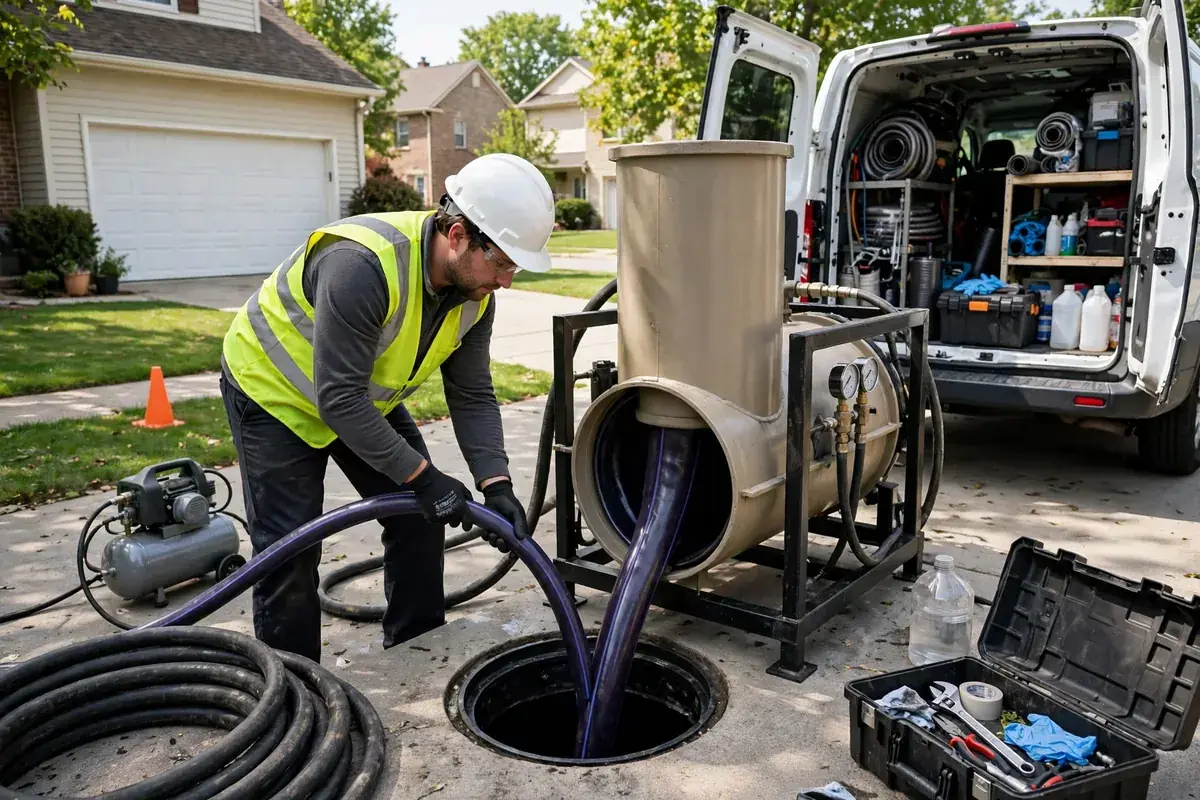
"Trenchless" covers two very different technologies. Both avoid digging a full-length trench, but they work in opposite ways — one builds a new pipe inside the old one, the other destroys the old pipe and replaces it. Knowing the difference helps you understand a contractor's recommendation.
Cured-in-place pipe (CIPP) lining
A flexible felt or fiberglass tube is saturated with resin, then inverted (turned inside-out) or pulled into the existing pipe. An inflatable bladder presses it against the old pipe wall while the resin cures — with hot water, steam, ambient time or UV light, depending on the system. The result is a smooth, jointless pipe inside the original.
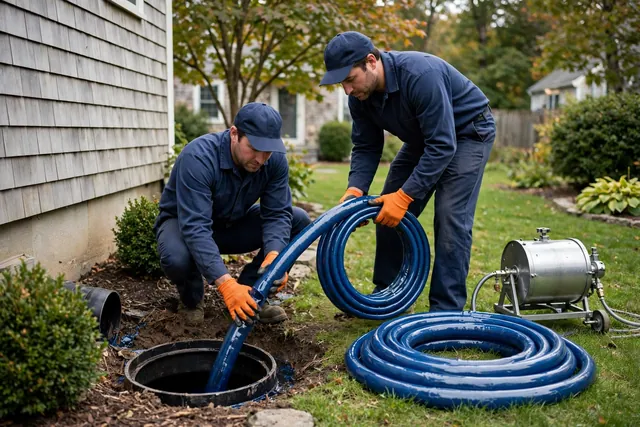
Lining is good for: cracks, leaking joints, root intrusion, corrosion — in a pipe that still holds its shape. It often needs only a cleanout or one small pit.
Lining can't fix: sags (it follows the existing slope), fully collapsed sections, or badly offset joints. It also slightly reduces the inside diameter.
Pipe bursting
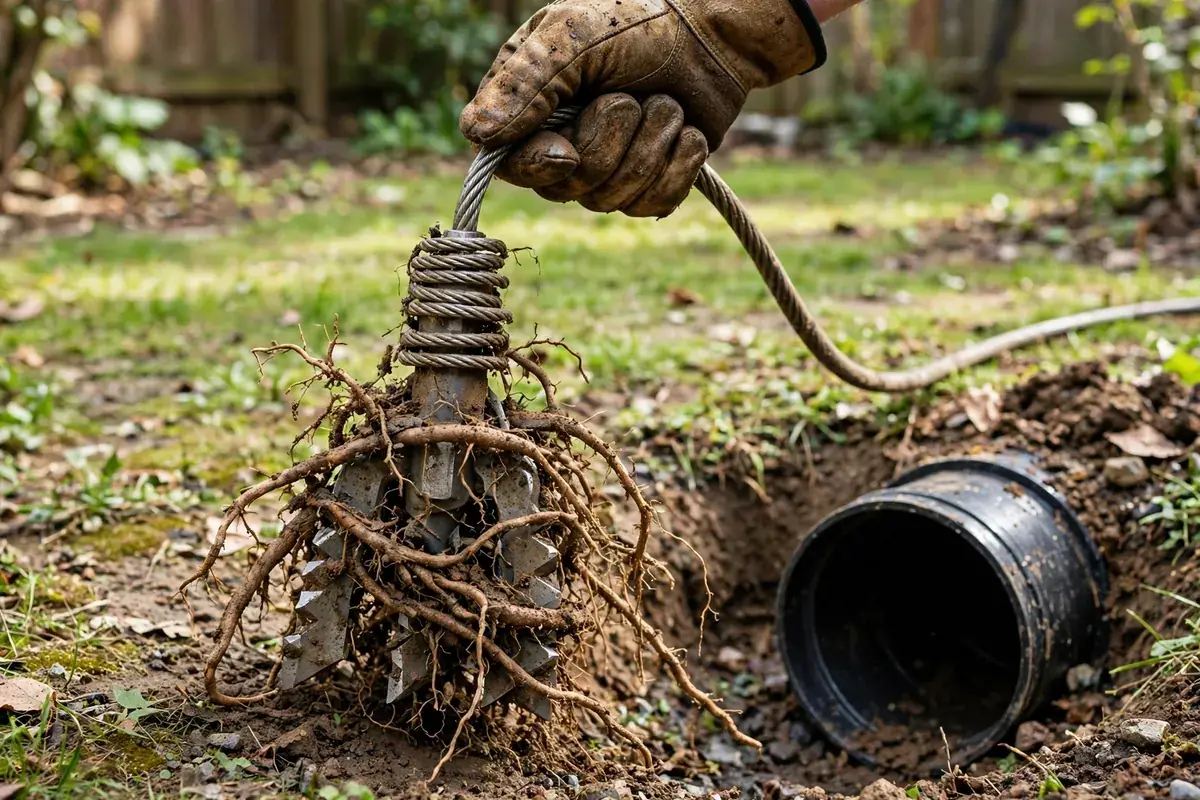
A cone-shaped bursting head is pulled through the old pipe by a cable or rods. It fractures the old pipe outward into the surrounding soil while dragging a continuous new pipe — usually high-density polyethylene (HDPE) with fused joints — into the same path.
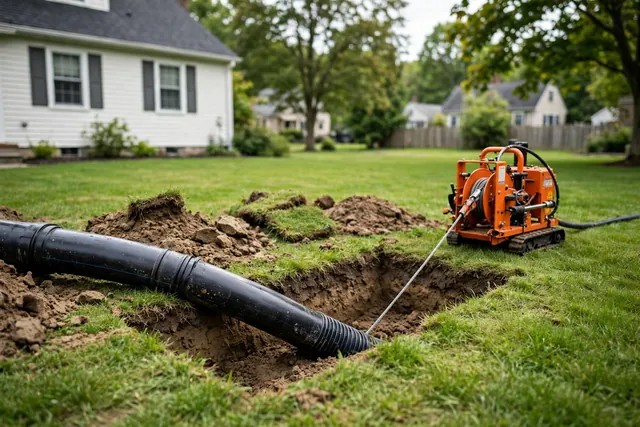
Bursting is good for: badly deteriorated clay, cast iron and Orangeburg, and for keeping or increasing the pipe size.
Bursting is limited by: the need for entry and exit pits, nearby shallow utilities, sharp bends, and very rocky soil or ledge.
Which one is right for your line?
| Situation | Likely recommendation |
|---|---|
| Cracks and roots, pipe round | Lining |
| Orangeburg or heavily broken clay | Bursting or open-trench replacement |
| Long sag holding water | Excavate that section |
| Line under a driveway or large tree | Lining if the pipe qualifies |
| Shallow gas or water line right alongside | Lining or open trench rather than bursting |
Connecticut considerations
Ledge and boulders across many hill towns make digging slow and costly, which favors lining when the pipe is a candidate. High groundwater on the shoreline and along the rivers complicates open trenches. And in dense neighborhoods with shared driveways and tight setbacks, small access pits are much easier to manage than a full trench.
What happens on the day: a typical lining job
- Clean. The line is hydro-jetted to remove roots, grease and scale so the liner bonds to a clean wall.
- Inspect and measure. A camera confirms the pipe is a candidate and measures the exact length to line.
- Wet out the liner. The liner is saturated with resin, often on site, cut to length.
- Install. The liner is inverted with air or water pressure, or pulled into place and inflated with a bladder.
- Cure. Heat, steam, ambient time or UV light hardens the resin — from under an hour to several hours depending on the system.
- Reopen and verify. Any branch connections are reinstated with a cutter, and a final camera pass shows the new pipe wall.
What happens on the day: a typical bursting job
- Locate and mark. The line and nearby utilities are located and marked, including through Call Before You Dig (811).
- Dig pits. An entry pit near the house and an exit pit near the main or property line.
- Fuse the new pipe. HDPE pipe sections are heat-fused into one continuous length.
- Pull through. A winch or rod machine pulls the bursting head and new pipe through the old line.
- Connect and test. The new pipe is connected at each end, inspected, and the pits are backfilled and restored.
Lining vs. bursting vs. open trench at a glance
| Lining | Bursting | Open trench | |
|---|---|---|---|
| Surface disruption | Lowest | Low (two pits) | Highest |
| Fixes sags | No | No | Yes |
| Fixes collapse | No | Sometimes | Yes |
| Final pipe size | Slightly smaller | Same or larger | Any |
| Joints in new pipe | None | None (fused) | Glued or gasketed joints |
| Restoration cost | Minimal | Small | Can be significant |
Questions to ask a trenchless contractor
- Which method do you recommend for my line, and why not the other?
- What liner or pipe system do you use, and what are its specifications?
- How will you handle the connection at the main or the septic tank?
- Will any part of the line still need excavation — at the foundation, the street or a sag?
- How are branch connections reopened after lining?
- Do I get before-and-after camera footage?
- What warranty covers the work and materials?
Myths about trenchless sewer repair
- "Trenchless means no digging at all." Often there's still a small pit or two — just far less than a trench.
- "A liner will fix any pipe." Liners need a pipe that holds its shape, and they follow the existing slope.
- "Trenchless is always the cheapest." Not always per foot. Its savings come from avoiding restoration and disruption.
- "Lining chokes the flow." The diameter shrinks slightly, but the smooth, jointless wall often flows as well as or better than rough old pipe.
Want to know if your line qualifies? Start with a camera inspection, then read our trenchless sewer repair page or call (855) 554-1144 to talk to a local contractor about Connecticut sewer line repair options.
Quick answers
Is trenchless always cheaper?
Not always per foot, but it often costs less overall once you include restoration of driveways, walks and landscaping.
How long does trenchless work take?
Many residential lining or bursting jobs are completed in a day or two after the line is cleaned and inspected.
Can trenchless methods be used on cast iron inside the house?
Lining is commonly used for cast-iron drains under slabs and inside buildings, which can avoid breaking up floors. Suitability depends on the pipe's condition and layout.
Does pipe bursting damage nearby utilities?
It can if utilities are very close, which is why lines are located and marked first. Where clearance is tight, lining or open trench may be recommended instead.
Can a line with bends be lined?
Many liners can negotiate moderate bends. Sharp fittings and multiple changes in direction need to be assessed on camera.
Have a sewer problem right now?
Call (855) 554-1144 to connect with an independent local contractor for sewer line repair in Connecticut.
This guide is general information, not a professional assessment of your property. Local rules, permits and responsibilities vary by town and sewer authority.