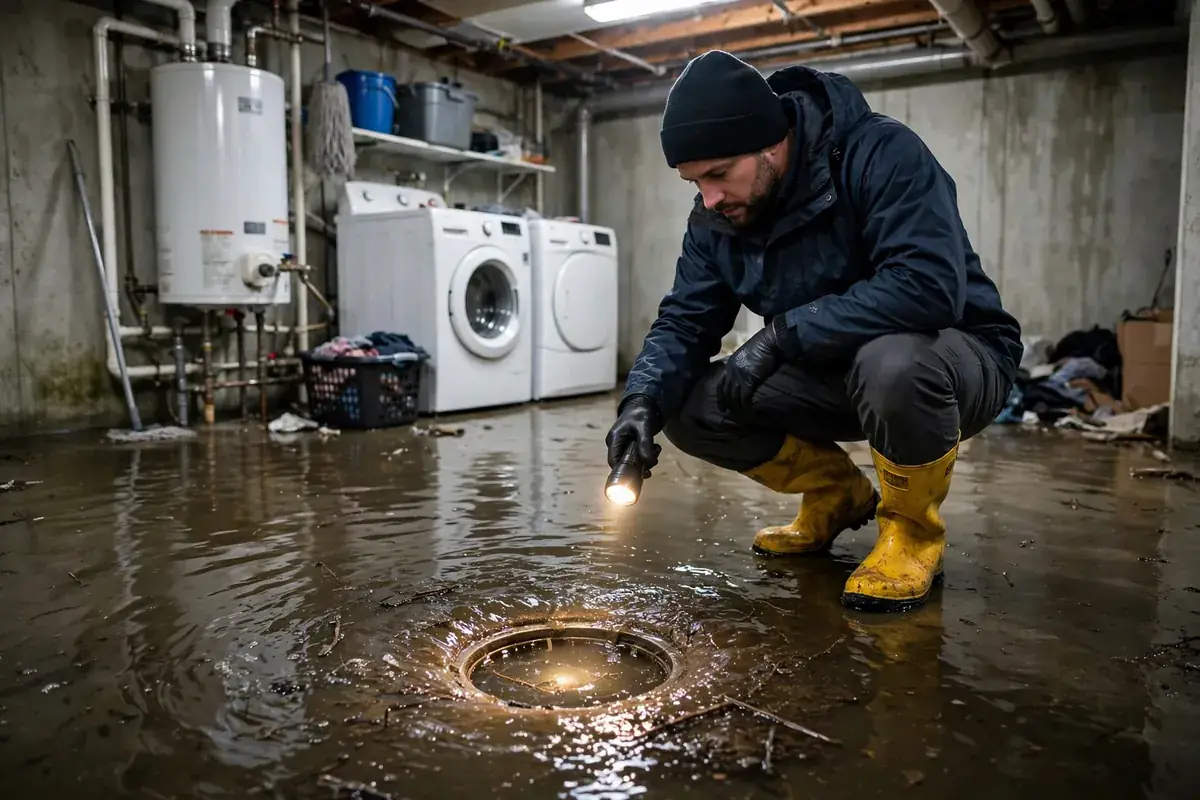
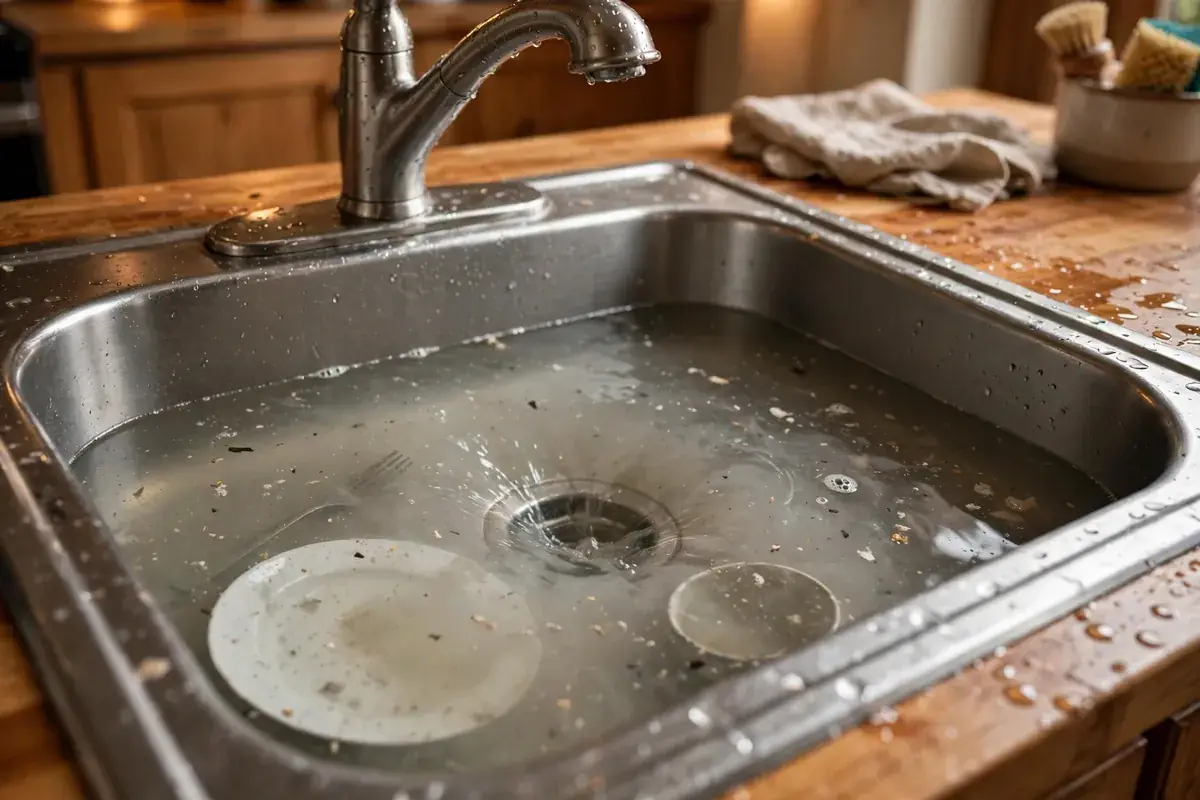
A sewer emergency is any situation where wastewater is backing up into your home, can't leave the house at all, or is surfacing in the yard. The priority is to stop using water, protect people from contact with sewage, and get the line cleared and diagnosed by a professional. Call (855) 554-1144 to be connected with an available local sewer contractor — response times depend on location, time of day and provider availability.
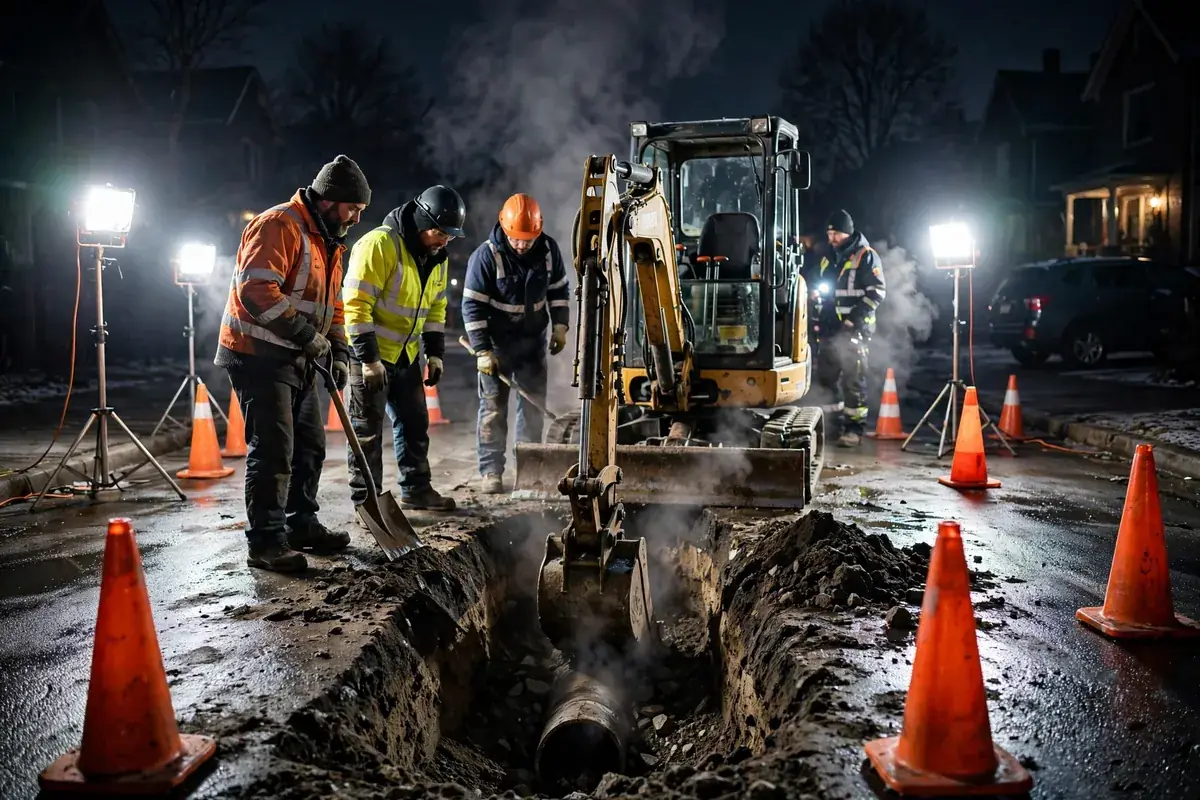
Crew working under lights on an emergency sewer line repair at night.
What to do right now
Stop running water. No flushing, showers, laundry or dishwasher — every gallon has nowhere to go but out the lowest drain.
Keep people and pets away from sewage. Wear gloves and boots if you must go near it.
Shut off electricity to the affected area only if you can do it safely and without standing in water.
Don't pour chemical drain openers into a main line backup — they rarely clear it and make the job more hazardous for the technician.
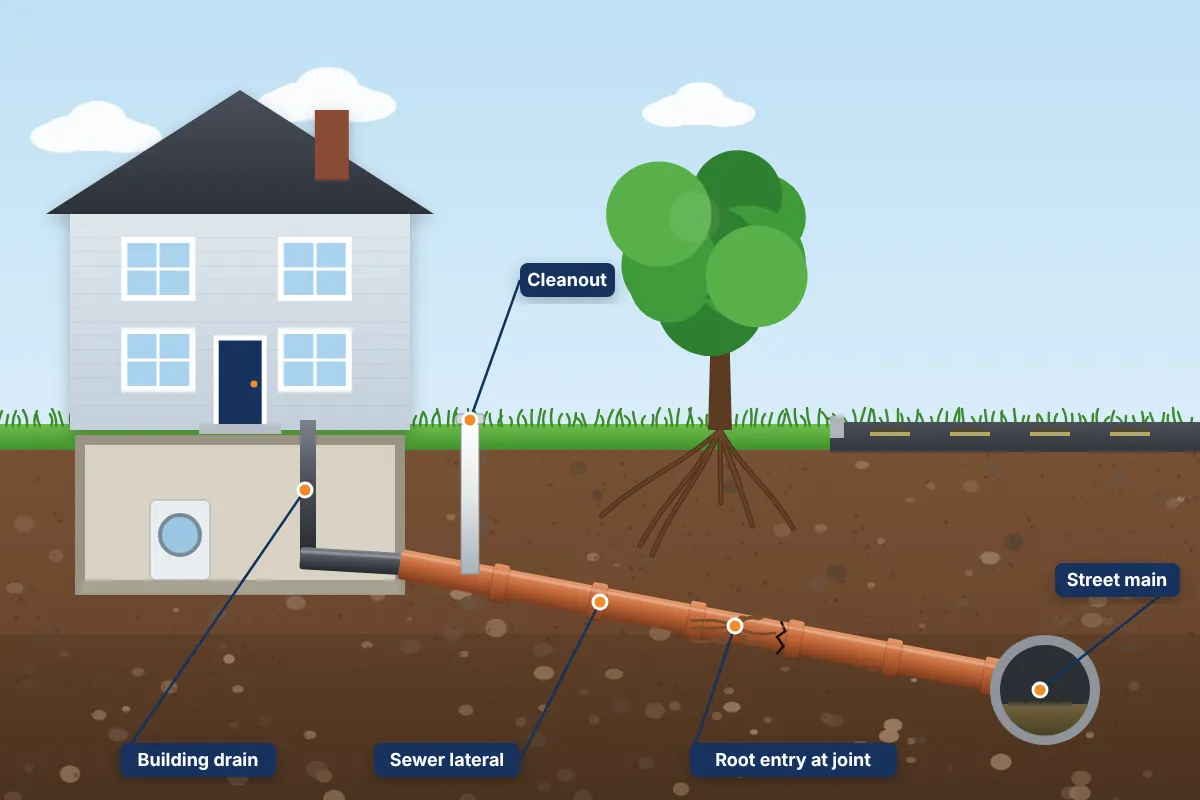
Find your cleanout if you know where it is. Don't open it if sewage is backed up behind it — it can release under pressure.
Take photos for your records and insurance.
Call for help — (855) 554-1144. If you're on a public sewer and suspect the problem is in the town main (neighbors affected too), also call your town's sewer department or WPCA.
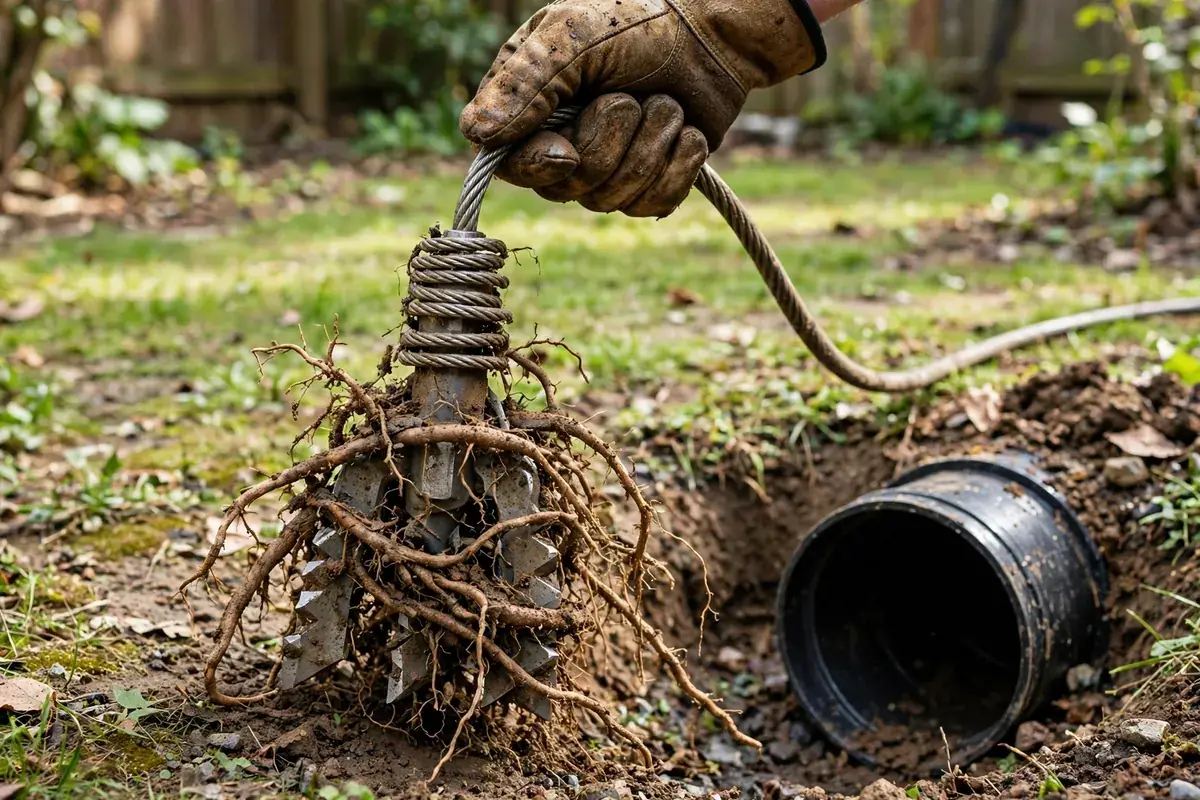
Main line blockage from roots, grease or wipes — the most common cause of sudden backups.
Collapsed or broken lateral in an older clay, cast-iron or Orangeburg line.
Heavy-rain backups in neighborhoods with combined or overloaded sewers.
Frozen or ice-blocked lines in rare cases, usually shallow sections or lines exposed in crawlspaces.
Septic-related backups where the building sewer or tank inlet is blocked.
What an emergency visit usually involves
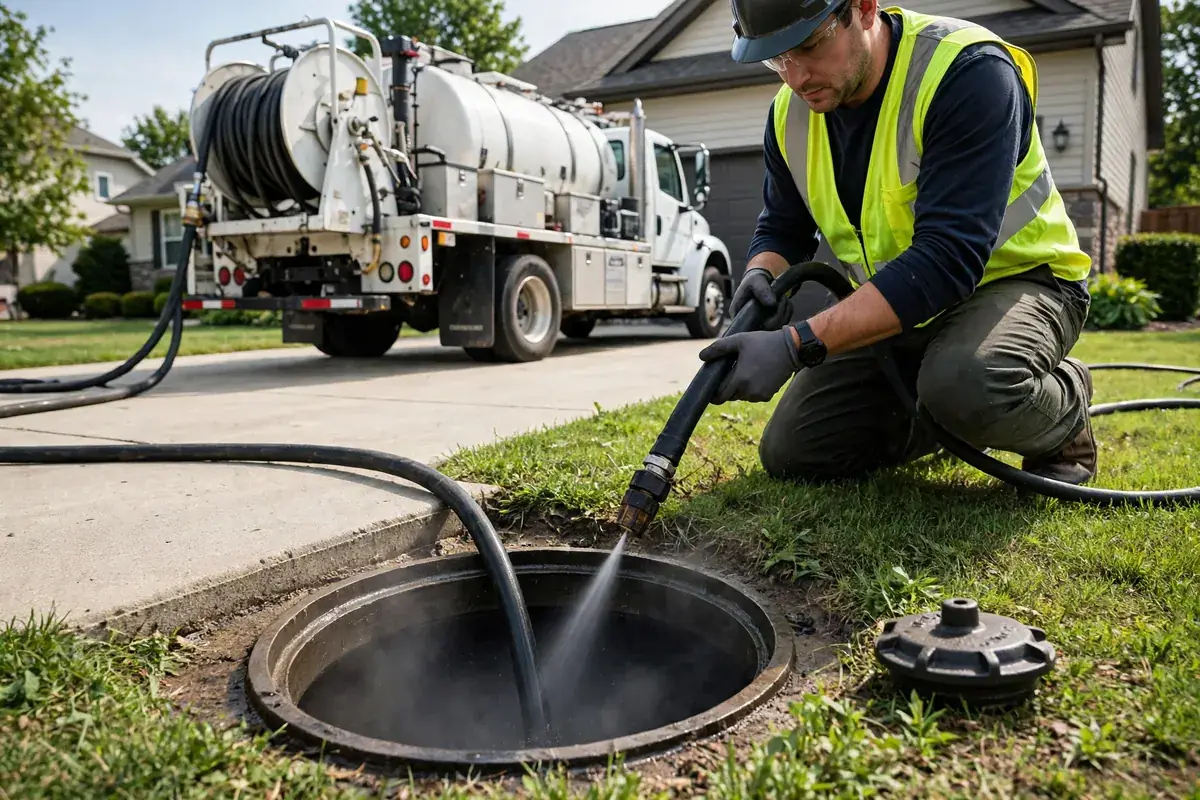
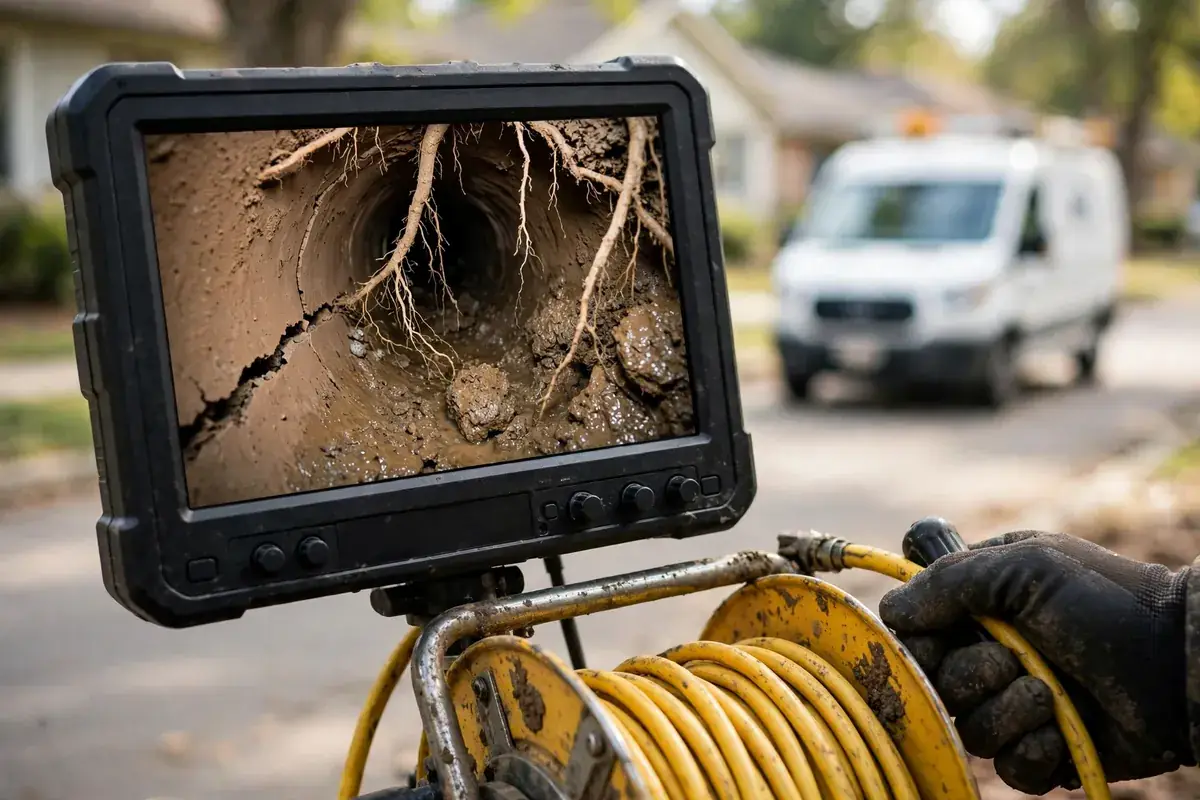
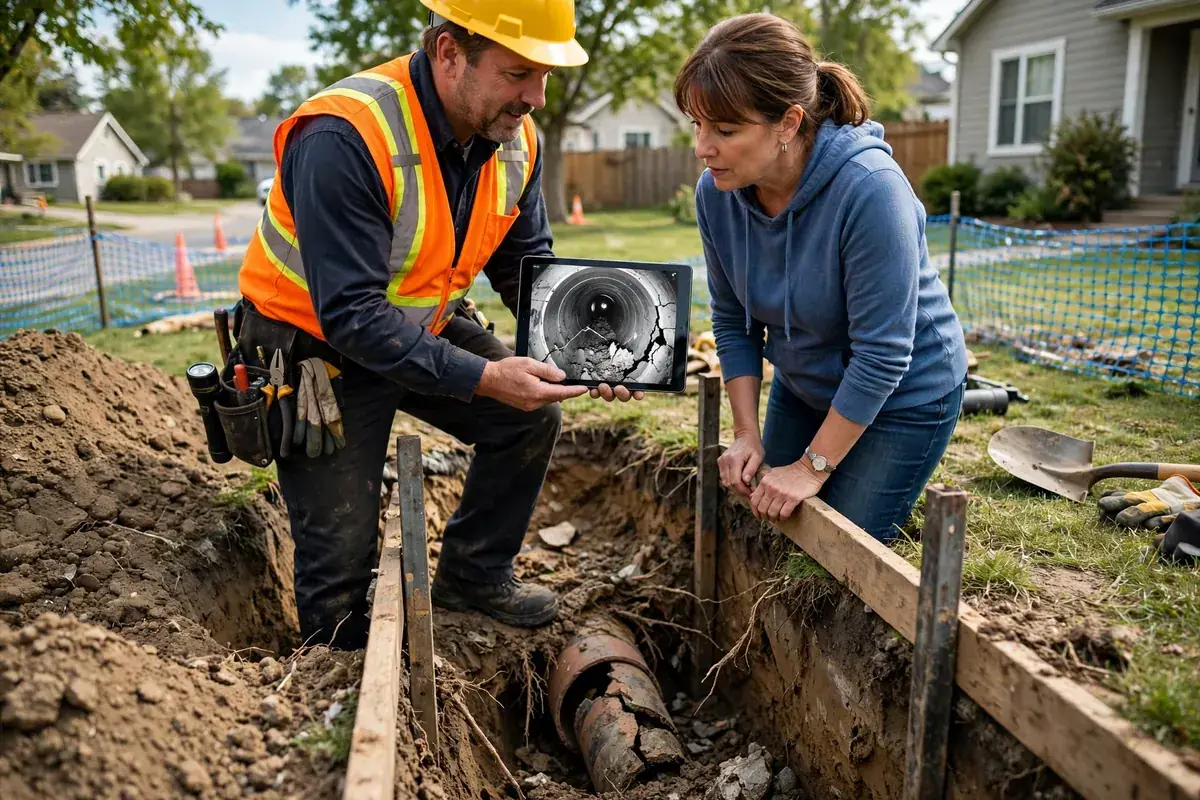
The first goal is to get the line flowing — usually by cabling (snaking) or hydro-jetting through a cleanout. Once it's open, a camera inspection shows why it blocked. If the line is broken or collapsed, the contractor can explain temporary measures and a permanent repair plan, from a spot repair to full replacement.
Clearing a clog isn't the same as fixing the pipe. If roots or a break caused the emergency, the backup will likely return. That's why we encourage every caller to understand their options for permanent sewer line repair in Connecticut once the immediate crisis is under control.
A note about availability
We connect callers with independent local contractors. Many offer urgent service, but availability — especially overnight, on weekends and during storms — varies by town and by provider. When you call, describe the situation clearly so you can be matched with someone who can help as soon as possible.
Ready to talk it through?
Call (855) 554-1144 to be connected with an independent local contractor for emergency sewer line repair in your Connecticut town. Describe the symptoms, your town and any past work — it helps them give you useful answers fast.
Our process
How It Works
From your first call to the finished repair.
01
Describe the problem
Call and explain the symptoms, the property type and your town. It takes a few minutes.
02
Get connected
We route your call to an independent local sewer contractor serving your area, subject to availability.
03
Inspection & diagnosis
The provider investigates — often with a camera — and explains what they find and where.
04
Choose your fix
Review the options and written scope, then decide. You work directly with the provider.
Service areas
Emergency Sewer Line Repair Across Connecticut
Choose your community for local details — neighborhoods, sewer setup and ground conditions — plus every sewer service available there.
Is a sewer backup covered by homeowners insurance?
Often only if you have a sewer or water backup endorsement — many standard policies exclude it. Check your policy and call your insurer early. Photos and the contractor's findings will help.
Should I call the town or a plumber?
If several neighbors have backups at the same time, the town main may be the problem — call your town's sewer department or WPCA. If it's just your home, the blockage is most likely in your private lateral, which is the owner's responsibility.
Can I use my sump pump or washing machine during a backup?
Avoid anything that sends water into the drains. Sump pumps that discharge outdoors are fine; ones tied into the sewer (which many towns prohibit) are not.
How quickly can someone come out?
It depends on your location, time of day and which providers are available. Call and describe the situation — urgent backups are prioritized wherever possible.
Tell us what's happening at your property and we'll connect you with an independent local sewer contractor who can diagnose it and explain your options.