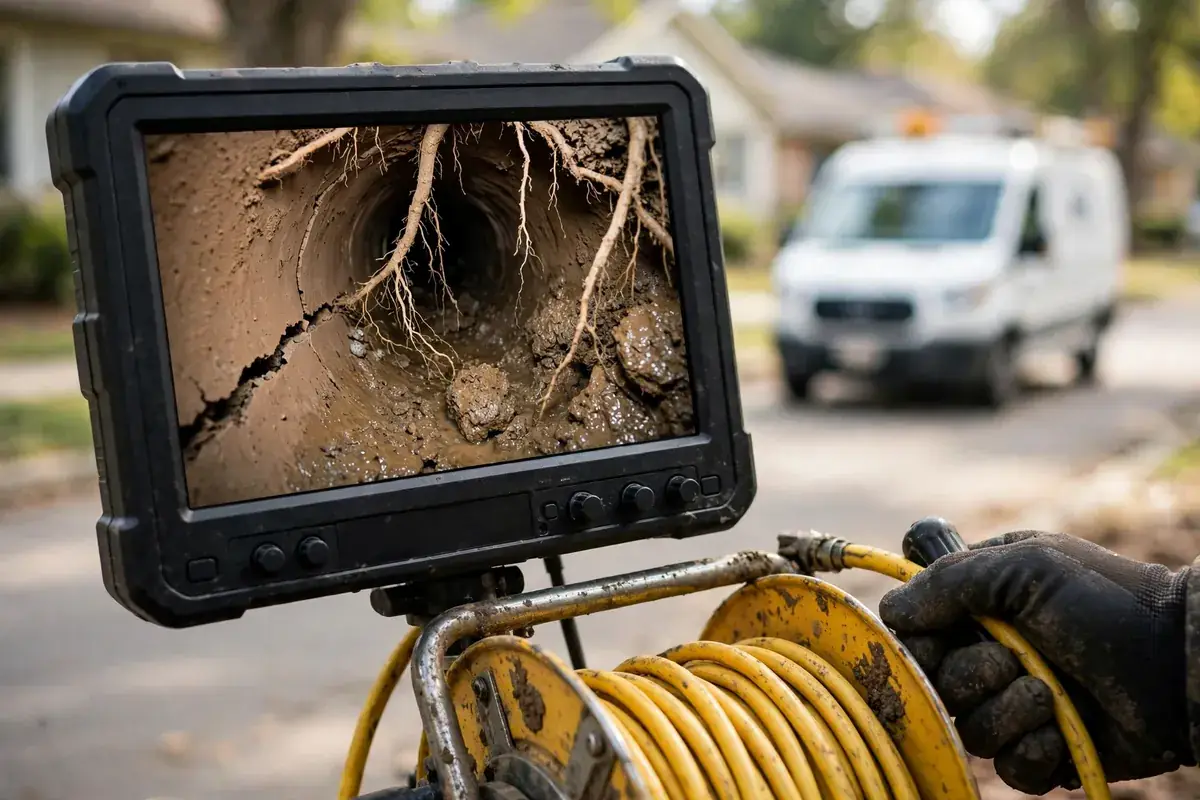
A sewer camera inspection sends a waterproof camera on a flexible push cable through your sewer line so a technician can see its condition on a monitor — cracks, roots, offset joints, bellies, grease and collapses — and locate the problem from the surface. It's the single most useful step before any repair, and it's smart before buying an older Connecticut home. Call (855) 554-1144 to connect with a local contractor who offers sewer scoping.
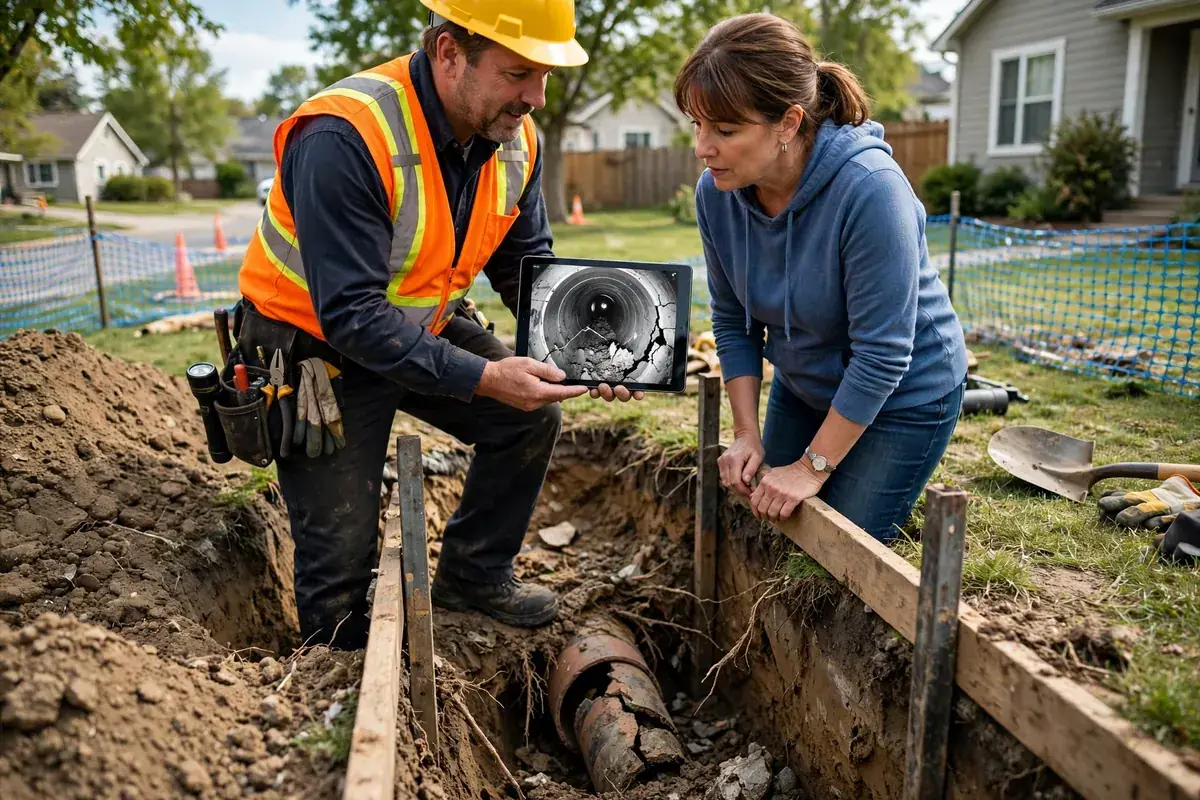
Technician holding a sewer camera monitor showing a crack inside a clay pipe.
What a sewer camera can find
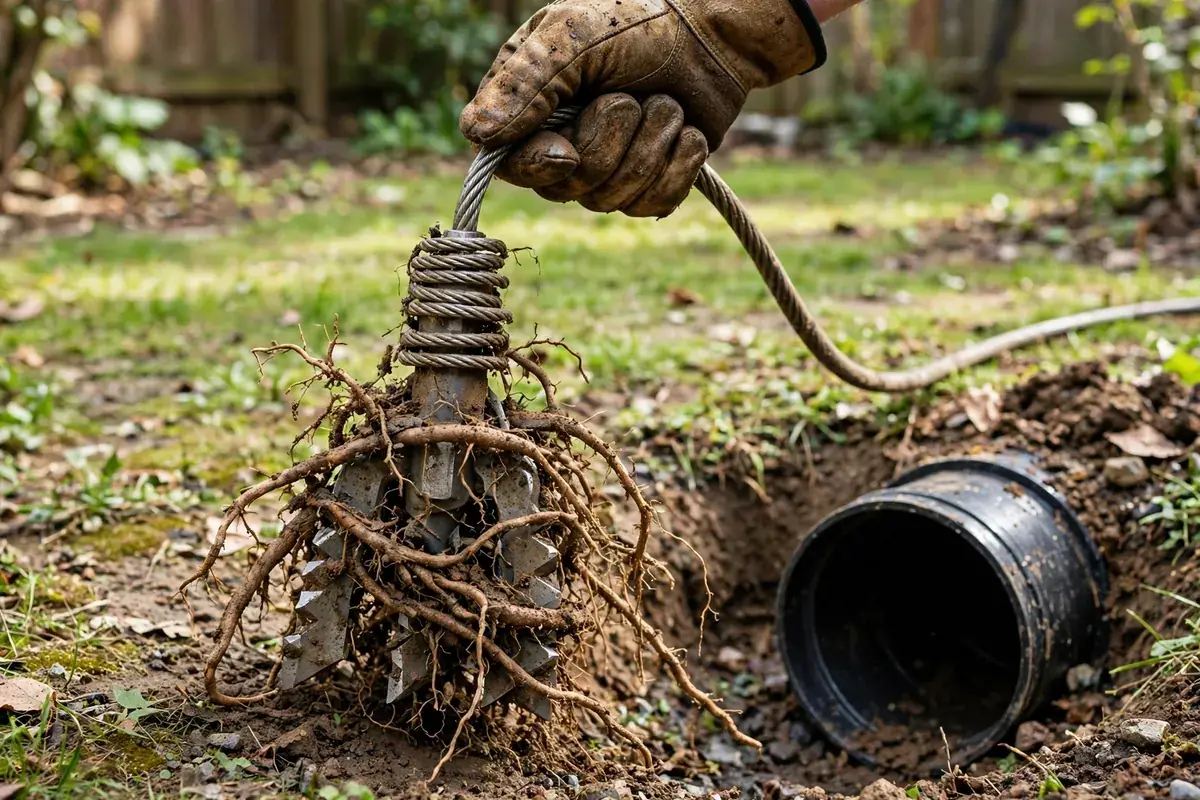
Root intrusion at joints and cracks
Cracks and fractures in clay and cast iron
Offset or separated joints
Bellies (sags) holding water
Orangeburg deformation and blistering
Grease and scale buildup
Collapsed sections and foreign objects
Bad connections at the main or septic tank
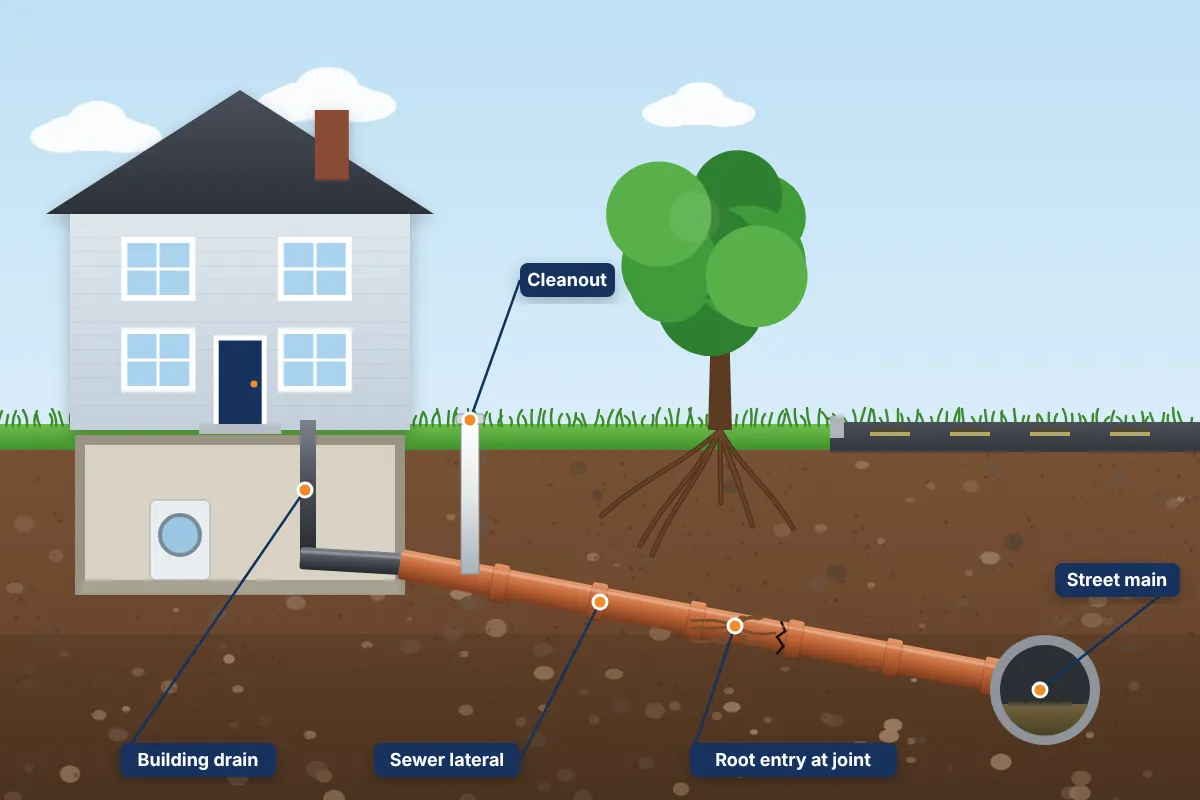
Most locating cameras carry a small transmitter (a sonde) in the head. With a receiver, the technician can mark the exact spot and depth of a defect on your lawn or driveway — which keeps any digging small and targeted.
When to get a sewer camera inspection
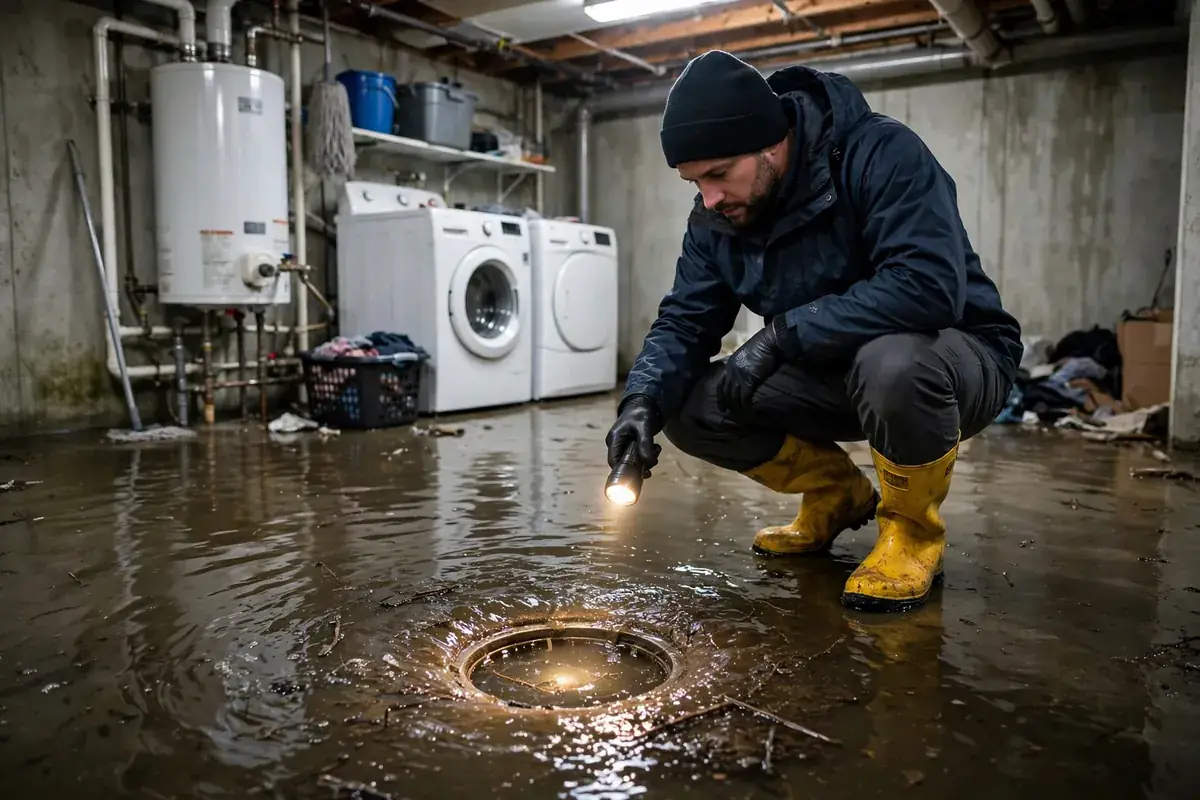
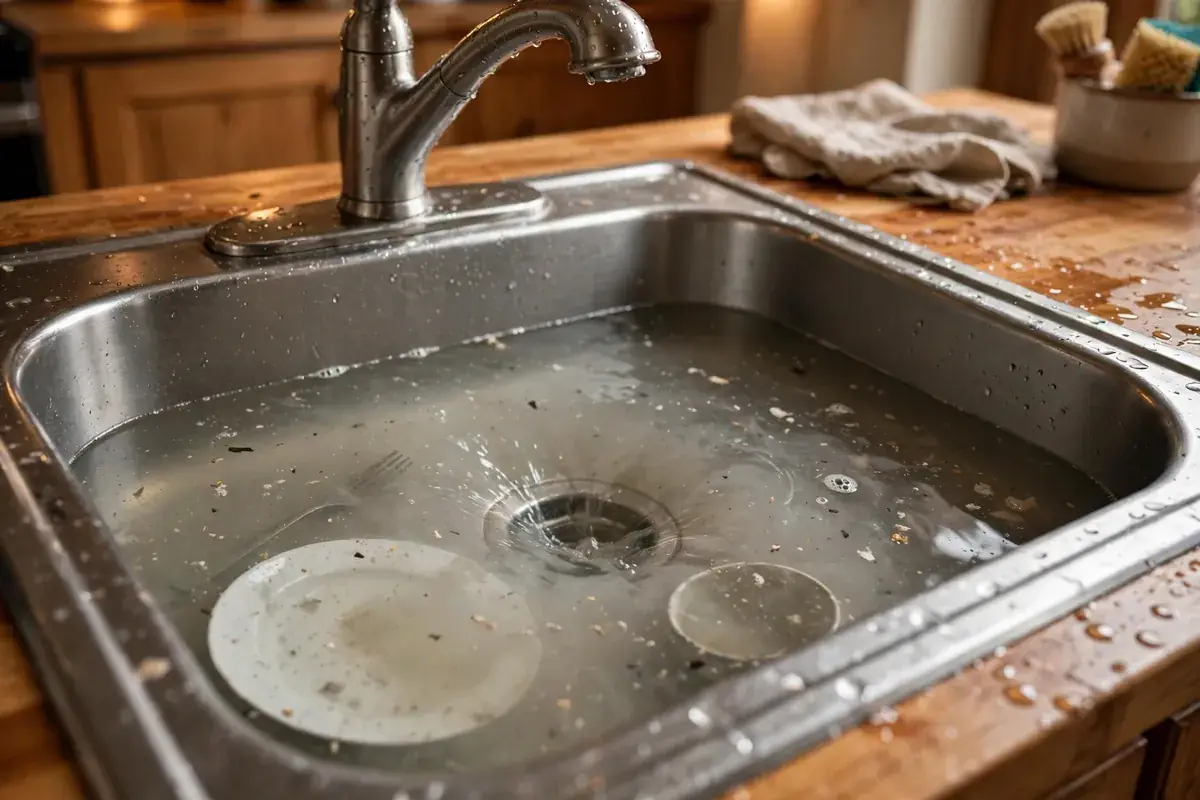
Recurring clogs or backups — especially if more than one fixture is affected. Our sewer backup diagnosis page explains why.
Before agreeing to a repair or replacement — so the scope is based on what's actually in the pipe.
After a cleaning — to see whether roots or buildup were the symptom of a cracked pipe.
Before buying a home, particularly one built before the 1980s, or with large trees near the line.
Signs of a leak — sewer odors, a soggy or unusually green strip of lawn, or settling over the line. Pair it with sewer line leak detection.
How a sewer camera inspection works
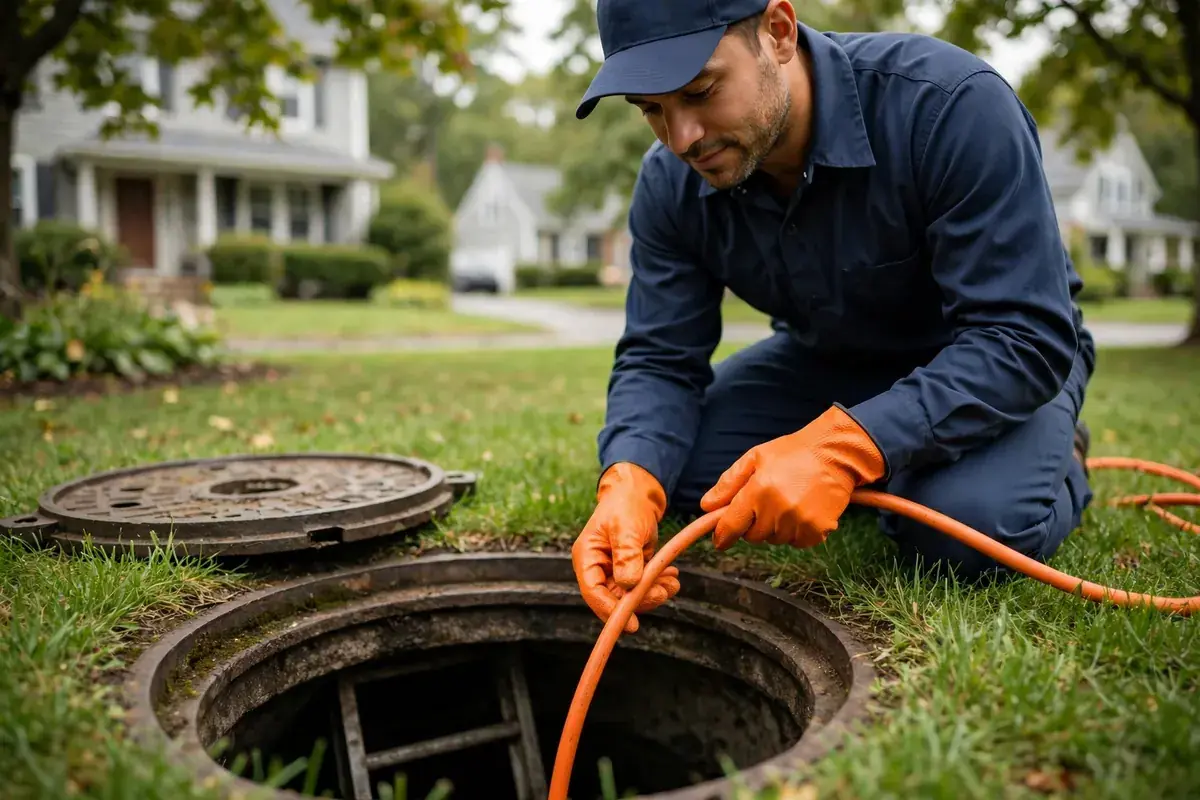
Access. The camera goes in through a cleanout, a roof vent, a pulled toilet or the trap in the basement.
Scope. The technician pushes the camera to the main or septic tank while watching the screen and noting distances.
Locate. Problem spots are located from above and marked.
Review. You see the footage and get an explanation in plain language. Ask for a copy of the video.
From century-old multi-family houses in Hartford, Waterbury and New Haven to post-war capes in Newington, Hamden and Stratford, a large share of Connecticut homes still drain through their original clay, cast-iron or Orangeburg laterals. A video inspection tells you which one you have and how much life it has left. On septic properties in towns like Madison, Guilford, Weston or Tolland, the camera can check the building sewer between the house and the tank — a common source of slow drains that gets blamed on the septic system.
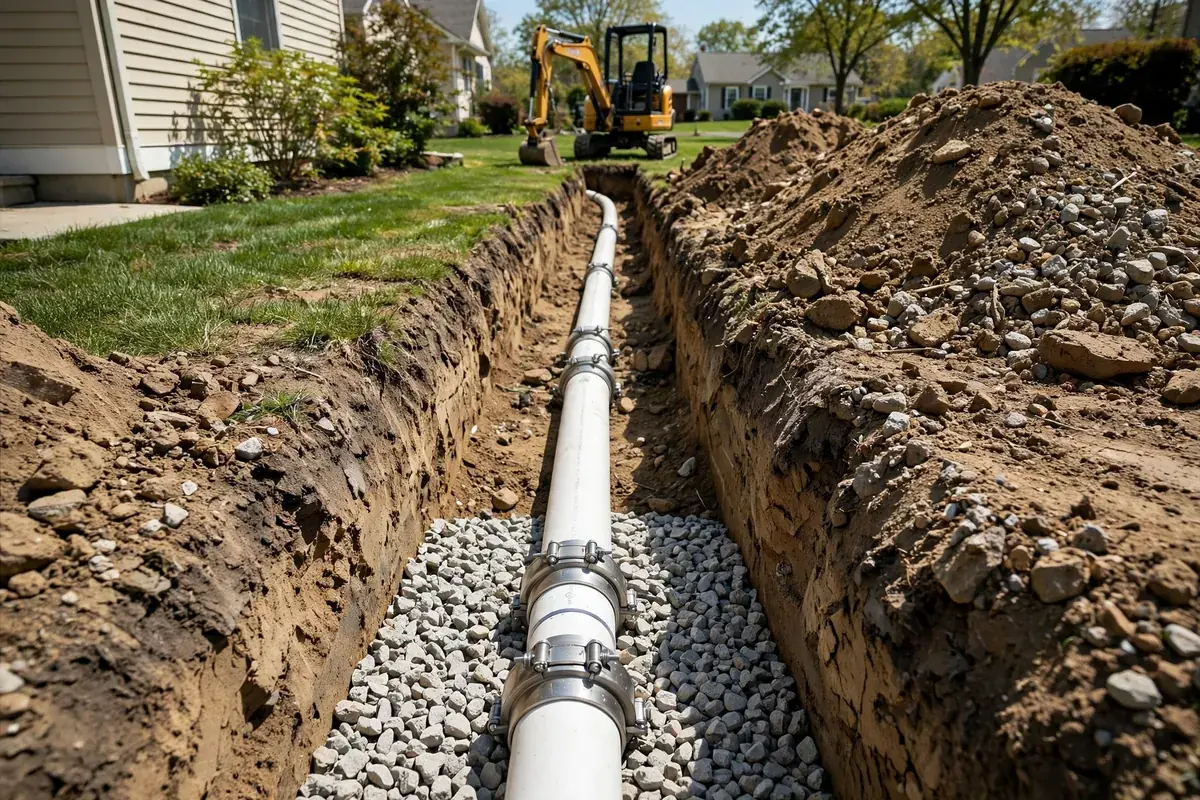
A camera inspection is the starting point for nearly every option on this site, from sewer line repair in Connecticut to trenchless lining.
What affects the cost of a sewer camera inspection?
Cost depends on access (an existing cleanout is easiest), the length of the line, whether the line must be cleared first, and whether you want a written report and video file. Some contractors credit the inspection toward repairs. Ask what's included before the visit.
Ready to talk it through?
Call (855) 554-1144 to be connected with an independent local contractor for sewer camera inspection in your Connecticut town. Describe the symptoms, your town and any past work — it helps them give you useful answers fast.
Our process
How It Works
From your first call to the finished repair.
01
Describe the problem
Call and explain the symptoms, the property type and your town. It takes a few minutes.
02
Get connected
We route your call to an independent local sewer contractor serving your area, subject to availability.
03
Inspection & diagnosis
The provider investigates — often with a camera — and explains what they find and where.
04
Choose your fix
Review the options and written scope, then decide. You work directly with the provider.
Service areas
Sewer Camera Inspection Across Connecticut
Choose your community for local details — neighborhoods, sewer setup and ground conditions — plus every sewer service available there.
Is a sewer camera inspection worth it when buying a house?
For older homes and homes with large trees near the line, many buyers consider it worthwhile, because a standard home inspection usually doesn't look inside the sewer lateral. It can reveal problems that would otherwise appear only after closing.
How long does a sewer scope take?
Many residential inspections take about an hour, longer if the line has to be cleared first or access is difficult.
Can the camera see the whole line?
Usually, if the pipe is open and accessible. A collapse, severe offset or heavy blockage can stop the camera, which itself tells the technician where the problem is.
Will I get a copy of the video?
Many contractors provide footage or a report on request. Ask before the appointment — it's useful for comparing quotes and for insurance or real-estate negotiations.
Do I need a cleanout for a camera inspection?
It's the easiest access point, but technicians can often enter through a roof vent, a basement trap or by pulling a toilet. If you have no cleanout, ask about adding one.
Tell us what's happening at your property and we'll connect you with an independent local sewer contractor who can diagnose it and explain your options.