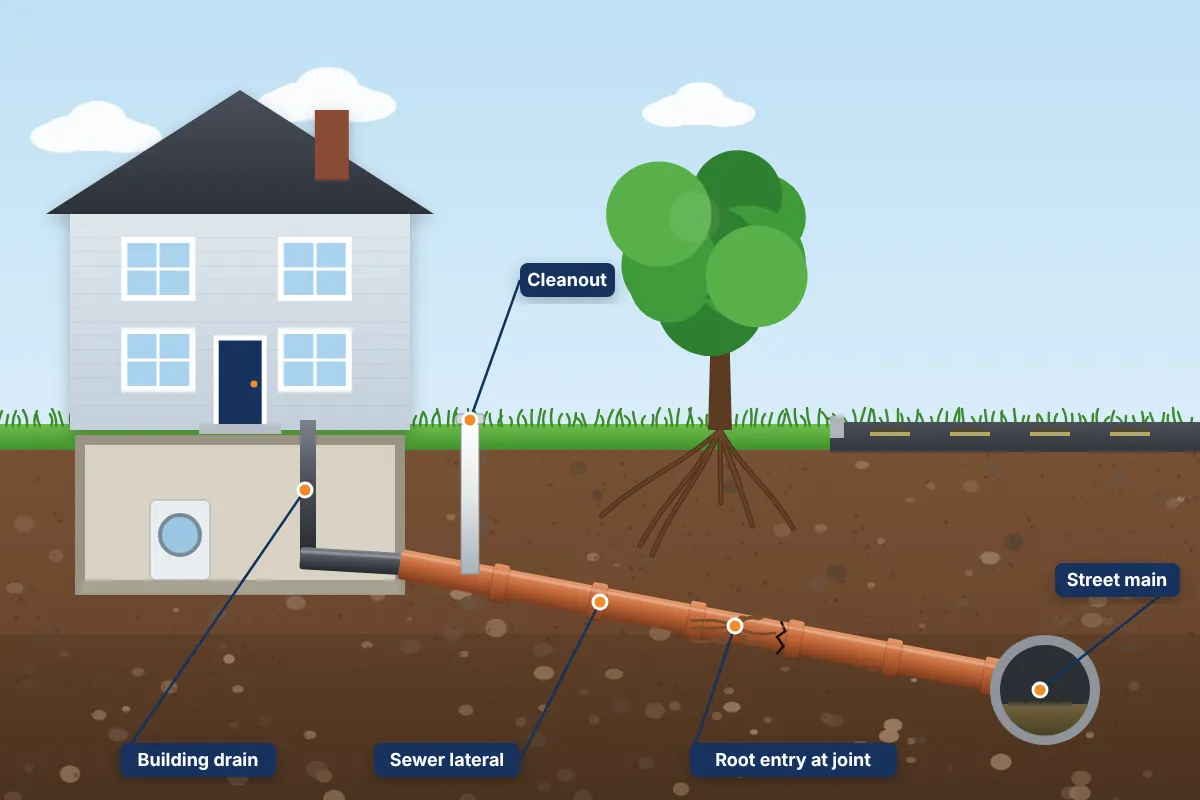
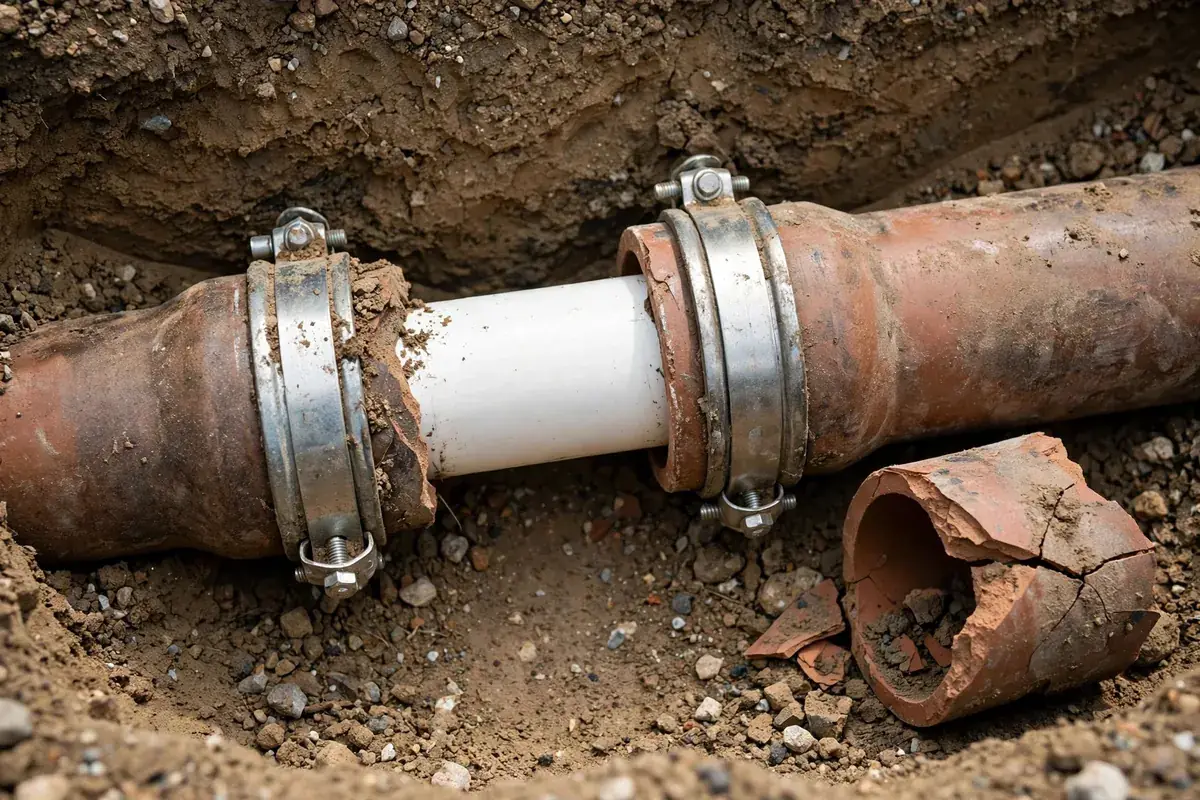
Sewer line replacement means removing or abandoning a failing building sewer and installing a new pipe — usually PVC or HDPE — from the house to the street main or septic tank. It's the right call when a camera shows damage along much of the line, when the pipe is Orangeburg or has collapsed, or when you've paid for one spot repair after another. Call (855) 554-1144 and we'll connect you with a local Connecticut sewer contractor who can confirm whether replacement is really needed before you commit.
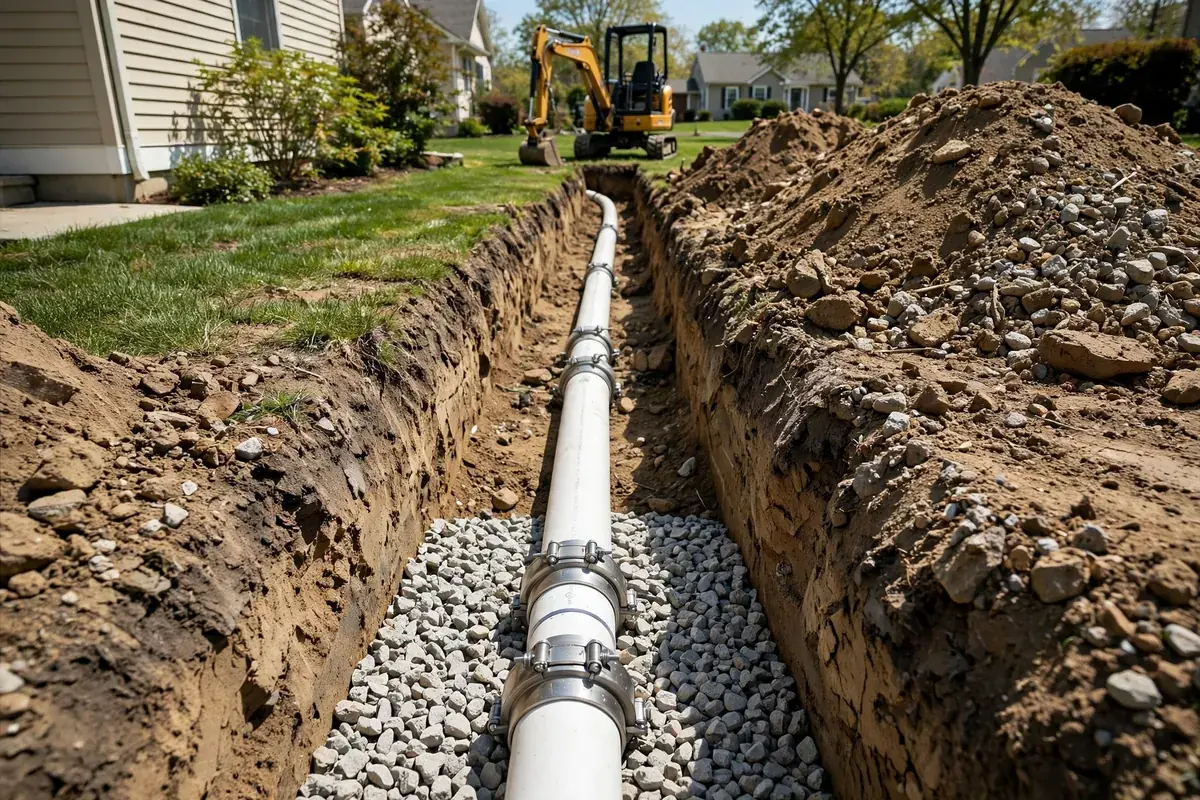
Illustration of a new PVC sewer line laid on compacted stone bedding in a trench at a laser-set grade.
When is sewer line replacement the right choice?
Replacement is usually recommended when the problem isn't one defect but the pipe itself. A local contractor will typically lean toward replacement when an inspection finds:
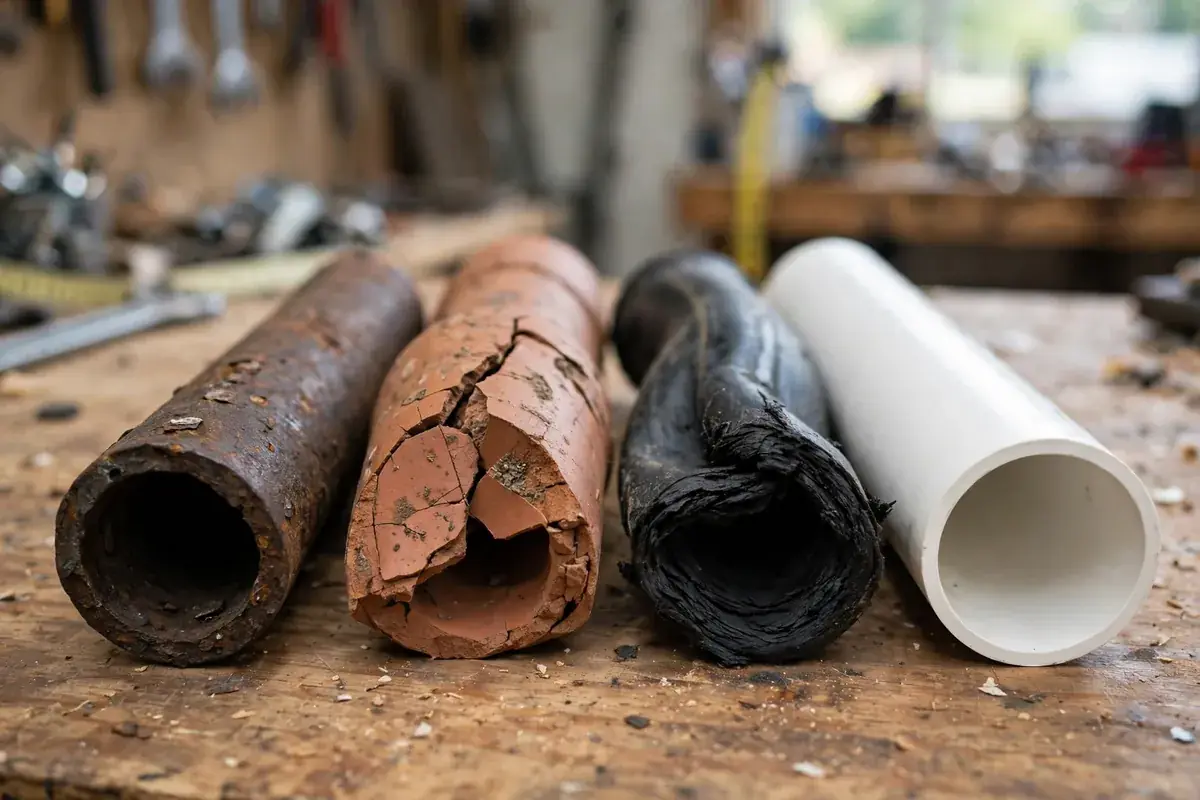
Orangeburg pipe — bituminous fiber pipe used in many post-war homes that deforms and blisters with age.
Multiple cracked or offset joints along a clay or cast-iron lateral rather than one isolated failure.
A collapsed section or a pipe that has lost its shape so badly a camera can't pass.
Bellies (sags) long enough to hold standing water and solids — lining can't fix the slope.
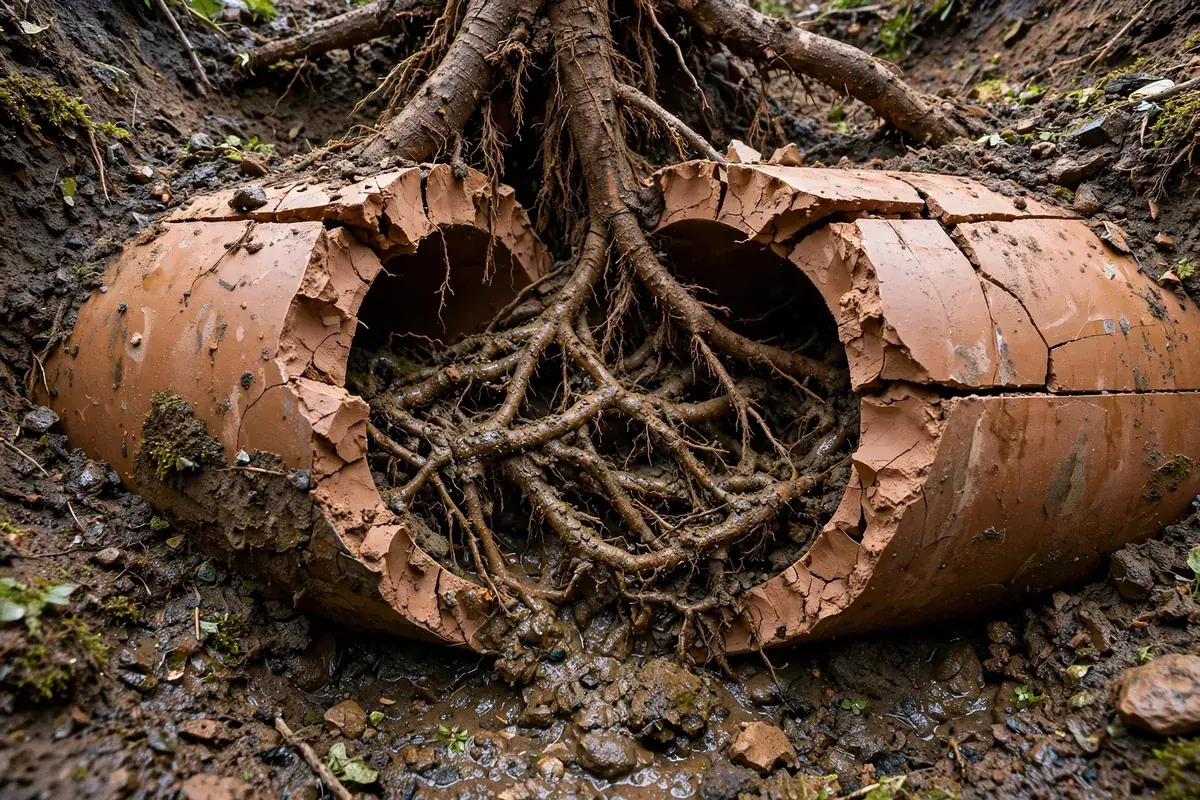
Repeated root intrusion after cleaning, where roots return through many joints.
A history of spot repairs that keeps growing — at some point a single new line costs less than the next three fixes.
If your inspection shows a single bad joint with sound pipe on either side, ask about a spot repair instead. Our guide on sewer line repair vs. replacement walks through how to compare the two honestly.
Replacement methods used in Connecticut
There are three common ways to replace a residential sewer lateral. The right one depends on depth, soil, access, what's in the way, and the condition of the old pipe.
Method
How it works
Best suited to
Watch-outs
Open-trench replacement
Excavate along the line, remove the old pipe, lay new PVC on proper bedding at a set grade, backfill and restore.
Bellied or collapsed lines, shallow runs, lines that need a grade correction.
Lawn, driveway and landscape restoration; ledge and boulders in many Connecticut towns.
Pipe bursting
A bursting head splits the old pipe while pulling new HDPE pipe into the same path from a small pit.
Clay, cast-iron and Orangeburg lines with a consistent path and few lateral connections.
Needs access pits; nearby utilities and very hard soils can limit it.
Cured-in-place lining
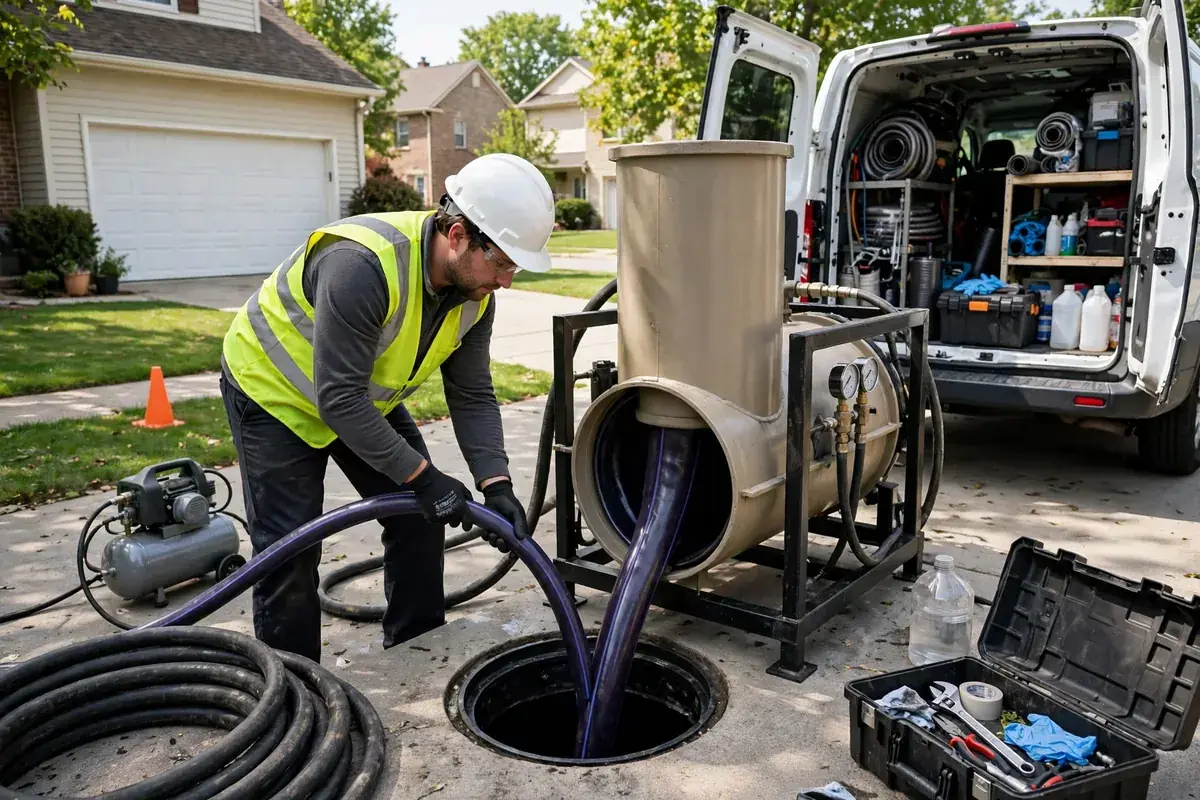
A resin-saturated liner is installed inside the old pipe and cured to form a new pipe within the pipe.
Cracked or root-damaged pipe that still holds its shape.
Can't fix sags or a fully collapsed section; slightly reduces inside diameter.
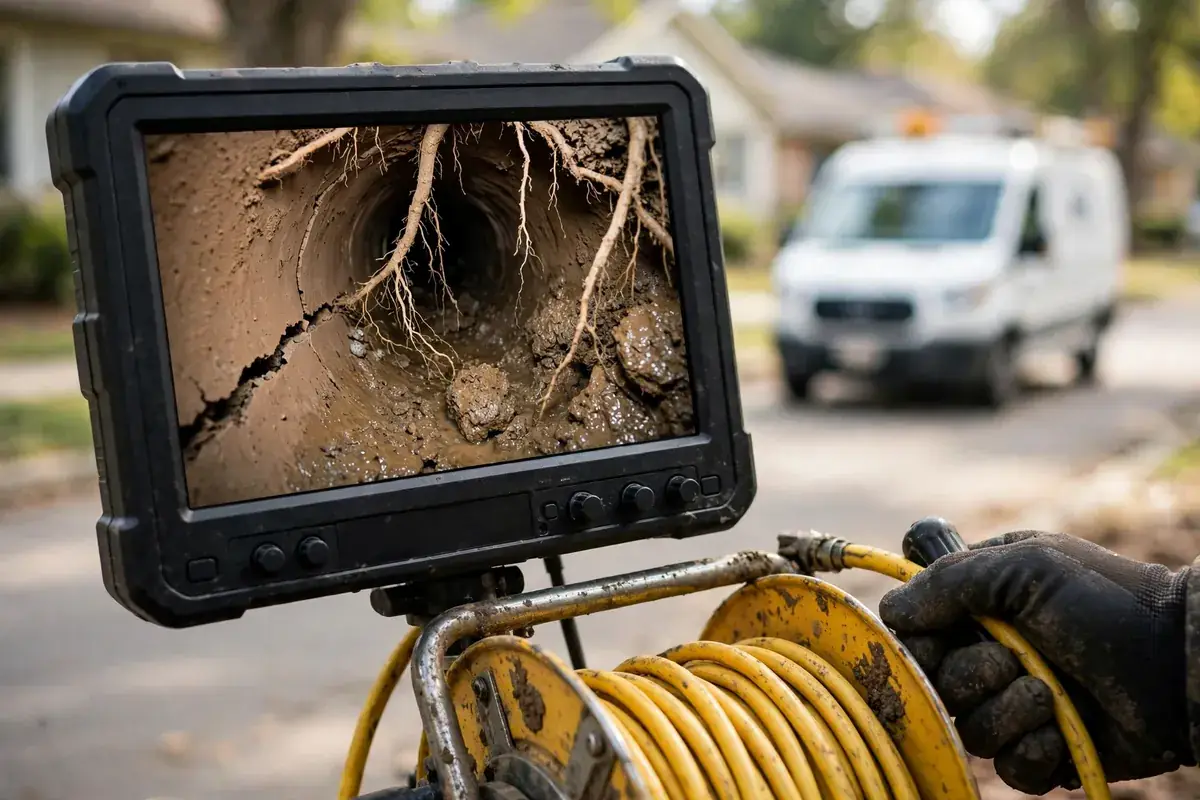
Camera inspection and locate. The line is inspected and its path and depth are located from the surface, so the plan is based on facts, not guesses.
Call Before You Dig. Connecticut law requires excavators to request utility mark-outs through 811 before digging, so gas, water and electric lines are marked first.
Permits. Most towns require a permit from the building department, the local water pollution control authority (WPCA) or both — and a street opening permit if work extends into the road.
Replacement. The old line is removed, burst or abandoned, and the new pipe is installed at a proper slope with cleanouts where they belong.
Inspection and testing. Many towns want to see the new pipe before backfill. A final camera pass is a good habit — ask for the video.
Restoration. Backfill, compaction and surface restoration — confirm in writing what's included (seed, loam, asphalt patch, walkway reset).
What affects the cost of sewer line replacement?
We don't publish prices because every job is different, and a number without an inspection isn't useful. These are the factors that move a Connecticut replacement quote the most:
Length and depth of the line, and whether the run goes under a driveway, patio, porch or mature trees.
Ledge, boulders and groundwater — common in hill towns and along the shoreline.
Method — trenchless can cost more per foot but save on restoration.
Street work — if the connection at the main must be redone, a road opening, traffic control and town fees may apply.
Permits and inspections required by your town or WPCA.
Restoration scope — lawn, landscaping, paving and hardscape.
Ask any contractor for a written scope that lists the method, pipe material, length, cleanouts, permits and restoration. Comparing scopes is more useful than comparing totals.
Sewer line replacement for older Connecticut homes
Connecticut's housing stock is old. Many city neighborhoods were built before 1940 with clay or cast-iron laterals, and post-war subdivisions from the late 1940s to the early 1970s were often plumbed with Orangeburg or early clay. Those materials are now reaching the end of their service life, which is why replacement questions come up so often in towns like Hartford, Waterbury, New Haven and New Britain. Learn how to identify what you have in our guide to Orangeburg, clay and cast-iron sewer pipes.
Homes on private septic need the same attention: the building sewer from the foundation to the tank can crack, sag or fill with roots just like a lateral to a city main. Replacement is part of the same family of work as general sewer line repair across Connecticut, and the same contractors typically handle both.
Ready to talk it through?
Call (855) 554-1144 to be connected with an independent local contractor for sewer line replacement in your Connecticut town. Describe the symptoms, your town and any past work — it helps them give you useful answers fast.
Our process
How It Works
From your first call to the finished repair.
01
Describe the problem
Call and explain the symptoms, the property type and your town. It takes a few minutes.
02
Get connected
We route your call to an independent local sewer contractor serving your area, subject to availability.
03
Inspection & diagnosis
The provider investigates — often with a camera — and explains what they find and where.
04
Choose your fix
Review the options and written scope, then decide. You work directly with the provider.
Service areas
Sewer Line Replacement Across Connecticut
Choose your community for local details — neighborhoods, sewer setup and ground conditions — plus every sewer service available there.
Many residential replacements are completed in one to three days once permits are in hand, but ledge, long runs, street connections and inspection scheduling can extend that. Your contractor should give you a timeline with the written scope.
Can I stay in my house during sewer line replacement?
Usually yes. Water use is limited while the line is disconnected, typically for part of a day. Ask the contractor when the cut-over will happen so you can plan around it.
Is trenchless replacement always better?
No. Trenchless methods protect landscaping and driveways, but they can't correct a sag, and they depend on access and soil. Open-trench is still the right answer for some lines. A camera inspection should drive the choice.
Who is responsible for the sewer line between my house and the street?
In most Connecticut towns the property owner is responsible for the building sewer (lateral) at least to the property line, and often to the connection at the main. Rules vary, so confirm with your town or WPCA — see our lateral responsibility guide.
Do I need a permit to replace a sewer line in Connecticut?
In most towns, yes. Expect a building or plumbing permit and often a sewer connection permit from the WPCA, plus a street opening permit if work enters the road. Licensed contractors normally pull these permits.
Tell us what's happening at your property and we'll connect you with an independent local sewer contractor who can diagnose it and explain your options.