Key takeaways
- One slow fixture is usually a local clog; several slow fixtures at once point to the main line.
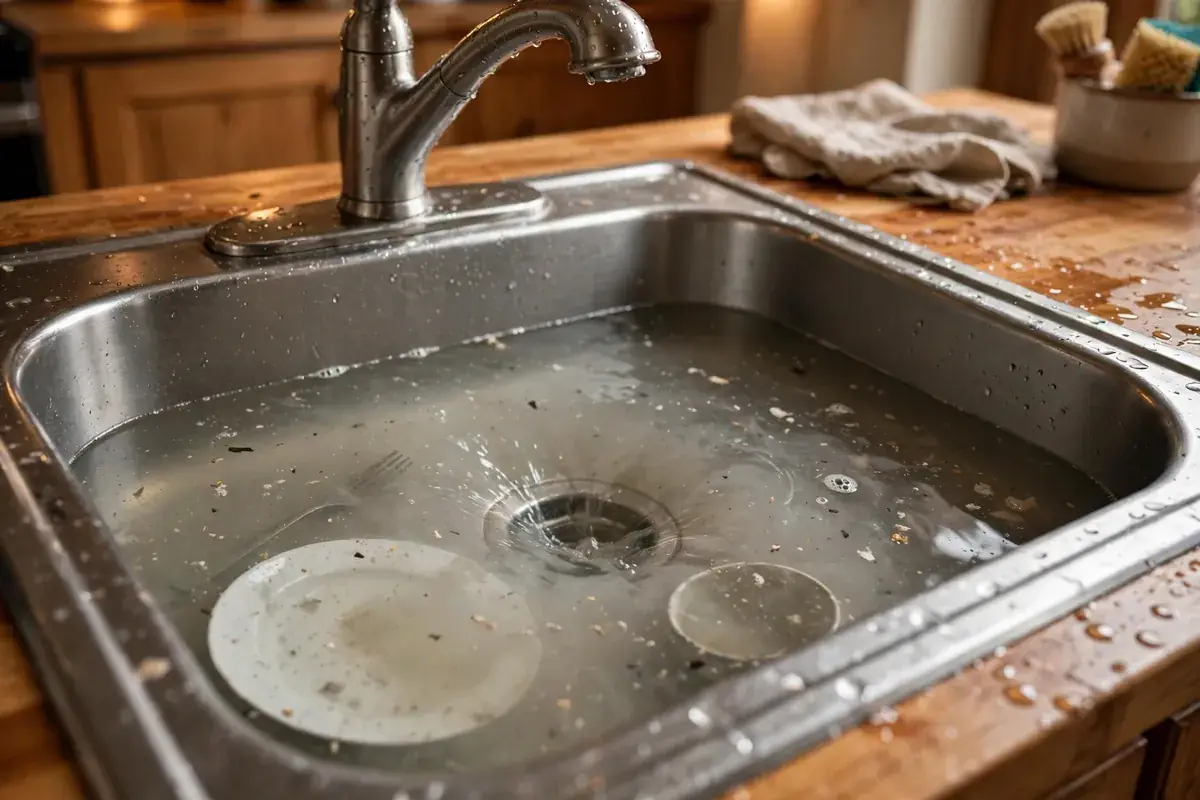
- Water rising in the lowest drain when another fixture runs is one of the clearest main-line warning signs.
- Backups that return after cleaning mean something structural — roots, a sag or a break — is catching waste.
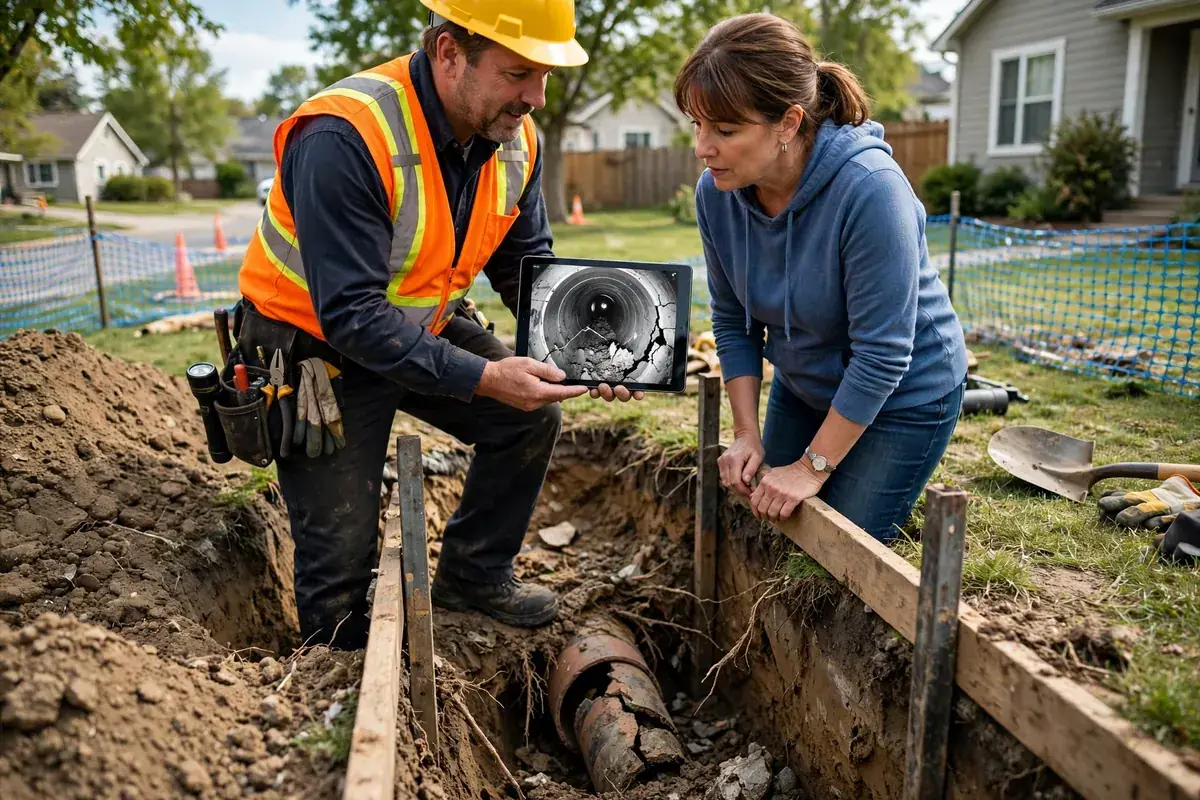
- A camera inspection is the step that turns symptoms into a diagnosis and a fair repair quote.
A broken sewer line rarely fails all at once. It usually gives warnings for weeks or months — slow drains, odd noises, smells, a patch of lawn that never dries. The trick is telling a simple clog from a failing pipe. Here are the nine signs that point to the main line, and what to do about each.
1. More than one fixture is slow at the same time
One slow sink is almost always a local clog in that fixture's drain. When the tub, the toilet and the basement sink are all sluggish, the problem is downstream of where those drains meet — the main building drain or the sewer lateral.
2. Water comes up the lowest drain
If the basement floor drain or a first-floor shower fills when the washing machine empties or a toilet flushes upstairs, wastewater can't get out of the house fast enough and is taking the easiest exit. This is one of the clearest signs of a main line problem. Our sewer backup diagnosis page explains how professionals confirm it.
3. Gurgling toilets and drains
Gurgling happens when air is pulled through water in a trap because flow downstream is restricted. Occasional gurgling can be a venting issue; frequent gurgling combined with slow drains usually isn't.
4. Sewer odor in the basement or yard
A healthy system is sealed. Persistent sewer smells can mean a cracked pipe, a failed joint or a dry trap. Outdoors, a smell near the cleanout or over the line's path is a red flag. If you're unsure whether it's sewer gas or natural gas, treat it as natural gas: leave and call the utility.
5. A soggy, sunken or extra-green strip of lawn
Leaking wastewater fertilizes the grass above it. A stripe of lawn that's greener, softer or wetter than the rest — especially in dry weather — often traces the path of a cracked lateral. Settling or a small sinkhole means soil is washing into the pipe. See sewer line leak detection for how the source is pinpointed.
6. Backups that return after cleaning
If a plumber clears the line and the problem comes back a few months later, the clog was a symptom. Roots, a sag or a broken section are catching waste. The next step should be a camera inspection, not another cleaning.
7. Roots or pipe pieces come back on the cable
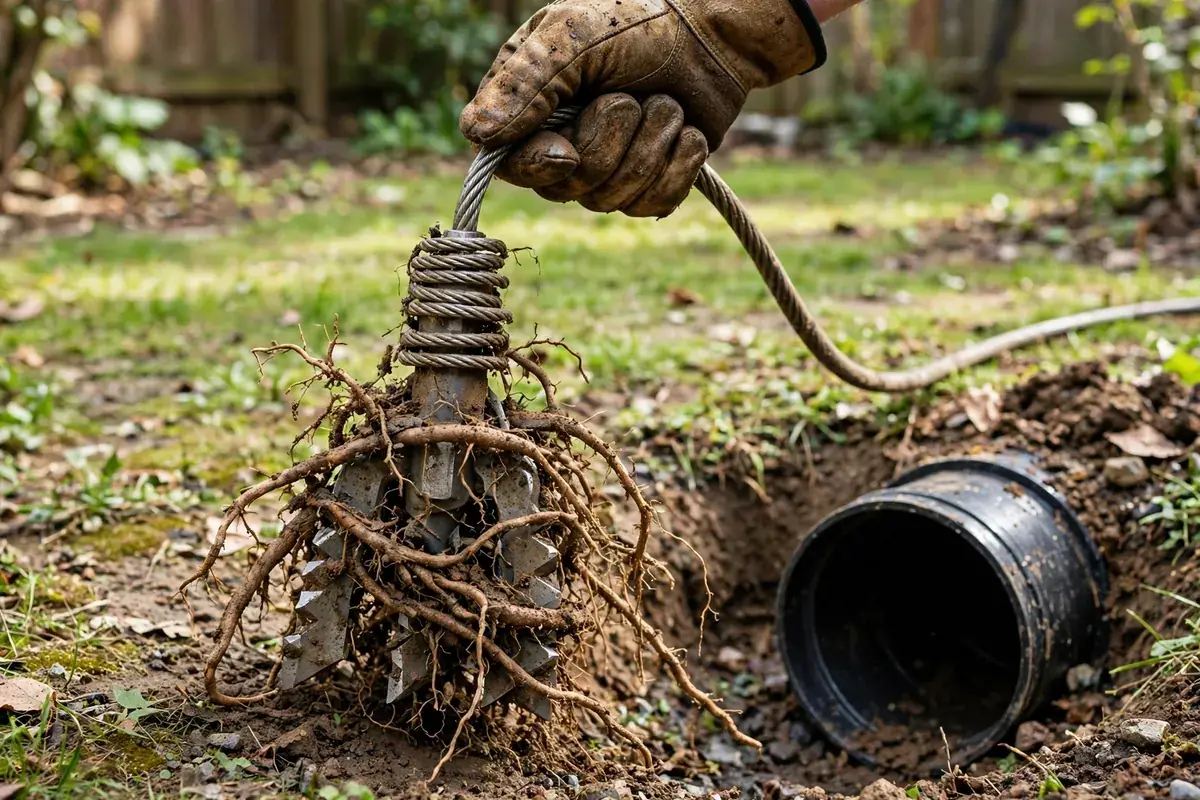
Ask what was on the end of the cable or jetter. Roots mean openings in the pipe. Shards of clay, black flakes (often Orangeburg) or soil mean the pipe itself is coming apart. Our guide to tree roots in sewer lines explains why roots get in.
8. Rodents or insects near the foundation
Rats can travel through broken sewer pipes. An unexplained rodent problem near the foundation or basement drains is worth mentioning when you call.
9. Your home is old and the line has never been inspected
This isn't a symptom, but it's a risk factor. Much of Connecticut's housing was built before 1980, when clay, cast iron and Orangeburg were standard. If you've never seen your sewer line on camera, you don't know how much life it has left. Read about older sewer pipe materials to understand what you may have.
What to do if you notice these signs
- Stop putting grease and wipes down the drain and reduce heavy water use if drains are slow.
- Note the pattern — which fixtures, when, after what. It speeds up diagnosis.
- Get the line cleared if it's blocked, then get a sewer camera inspection so you know the cause.
- Compare repair options based on the footage — spot repair, lining or replacement. Our guide to repair vs. replacement helps.
A simple at-home test: is it the main line?
You can narrow things down before anyone arrives, without tools. Do this only if nothing is actively overflowing.
- Start at the bottom. Stand by the lowest drain in the house — usually a basement floor drain, laundry sink or first-floor shower.
- Run water upstairs. Have someone run a bathroom sink for a minute, then flush a toilet on the highest floor.
- Watch and listen. If water rises in the lowest drain, or you hear gurgling there, wastewater isn't leaving the house freely — that's a main-line restriction.
- Try the washing machine. A washer's drain cycle pushes a lot of water at once. If the floor drain or a nearby toilet reacts, the main line is struggling.
- Stop if water rises. Don't keep testing. Note what happened and call.
If only one fixture is slow and nothing else reacts, the problem is most likely in that fixture's trap or branch line — a much smaller job.
Symptom-to-cause cheat sheet
| What you notice | Most common causes | Best next step |
|---|---|---|
| Several slow drains, getting worse over weeks | Root intrusion, grease buildup, sagging pipe | Main-line cleaning, then camera |
| Sudden total stoppage | Wipes or a root mass sealing the line, a collapse | Emergency clearing, then camera |
| Backups after heavy rain only | Groundwater entering cracks, overloaded public sewer | Camera; ask the town about the main |
| Odor with no visible backup | Dry trap, cracked vent or drain, leaking joint | Refill traps; smoke test if it persists |
| Green stripe or soft spot in the lawn | Cracked or separated lateral leaking into soil | Camera with locating, possibly dye test |
| Sinkhole or settling over the line | Soil washing into a broken pipe | Camera soon — avoid heavy loads on the area |
Why these signs are so common in Connecticut
A large share of Connecticut homes were built before 1980, when clay, cast iron and Orangeburg were the normal choices for sewer laterals. Many neighborhoods have mature street and yard trees whose roots spread far beyond the canopy. Add freeze–thaw cycles that shift soil every winter, ledge and boulders in the hill towns, and a high water table along the shoreline and river valleys, and you have conditions that stress old pipe from every direction.
Homes on septic aren't exempt. The building sewer from the house to the tank cracks, sags and fills with roots the same way, and it's frequently mistaken for a full septic system failure.
What not to do when you suspect a broken line
- Don't keep pouring chemical drain openers into a main-line problem. They rarely reach or clear the blockage, can damage older pipe, and make the line hazardous for whoever has to open it.
- Don't ignore a backup that "went away on its own." Something let it drain, but whatever caught the waste is still there.
- Don't dig to find the pipe yourself. Connecticut requires a Call Before You Dig (811) request before excavation, and gas and electric lines are often close to sewer laterals.
- Don't agree to replacement without seeing footage. A reputable contractor can show you what they found and where.
How urgent is it?
| Situation | Urgency |
|---|---|
| Sewage backing up into the house now | Call immediately — stop using water |
| Main line draining very slowly, gurgling throughout | Within days — a full stoppage may be close |
| Recurring backups every few months | Schedule a camera inspection soon |
| Odor or soggy lawn, drains still working | Schedule an inspection; don't wait for a backup |
| Older home, no symptoms, never inspected | Worth a preventive inspection, especially before buying or landscaping |
If you're seeing any of these signs, call (855) 554-1144. We'll connect you with a local contractor for sewer line repair in Connecticut who can tell you what's going on — and what it will take to fix it.
Quick answers
Can a broken sewer line fix itself?
No. Cracks, open joints and sags get worse over time as roots grow and soil moves. Early repairs are usually smaller and less disruptive.
How long do sewer lines last?
It depends on the material and conditions. Orangeburg often fails within a few decades; clay and cast iron can last much longer but are vulnerable at joints and to corrosion. Modern PVC is expected to last many decades.
Can a broken sewer line make you sick?
Contact with sewage can expose people to bacteria and other pathogens, and sewer gas can cause headaches or irritation in enclosed spaces. Keep people and pets away from any backup, ventilate odors, and get the source fixed.
Why are all my drains slow but nothing is backing up yet?
That usually means a partial restriction in the main line — roots, buildup or a sag — that hasn't fully closed. It's the best time to act, before it becomes an emergency.
Will a home inspection catch a broken sewer line?
Usually not. Standard home inspections generally don't look inside the lateral. A separate sewer camera inspection is needed to see its condition.
Have a sewer problem right now?
Call (855) 554-1144 to connect with an independent local contractor for sewer line repair in Connecticut.
This guide is general information, not a professional assessment of your property. Local rules, permits and responsibilities vary by town and sewer authority.