Key takeaways
- A sewer scope shows the pipe's material, condition and the exact location and depth of defects.
- Most residential inspections take about an hour; heavily blocked lines may need clearing first.
- Always ask for the video and a written summary — it's useful for comparing quotes and for negotiations.
- Buyers of older Connecticut homes often find a pre-purchase sewer scope worth the cost.
A sewer camera inspection is the most useful hour you can spend before paying for any sewer repair. Here's what happens during one, what the common defects look like on screen, and what to ask afterward.
Before the visit
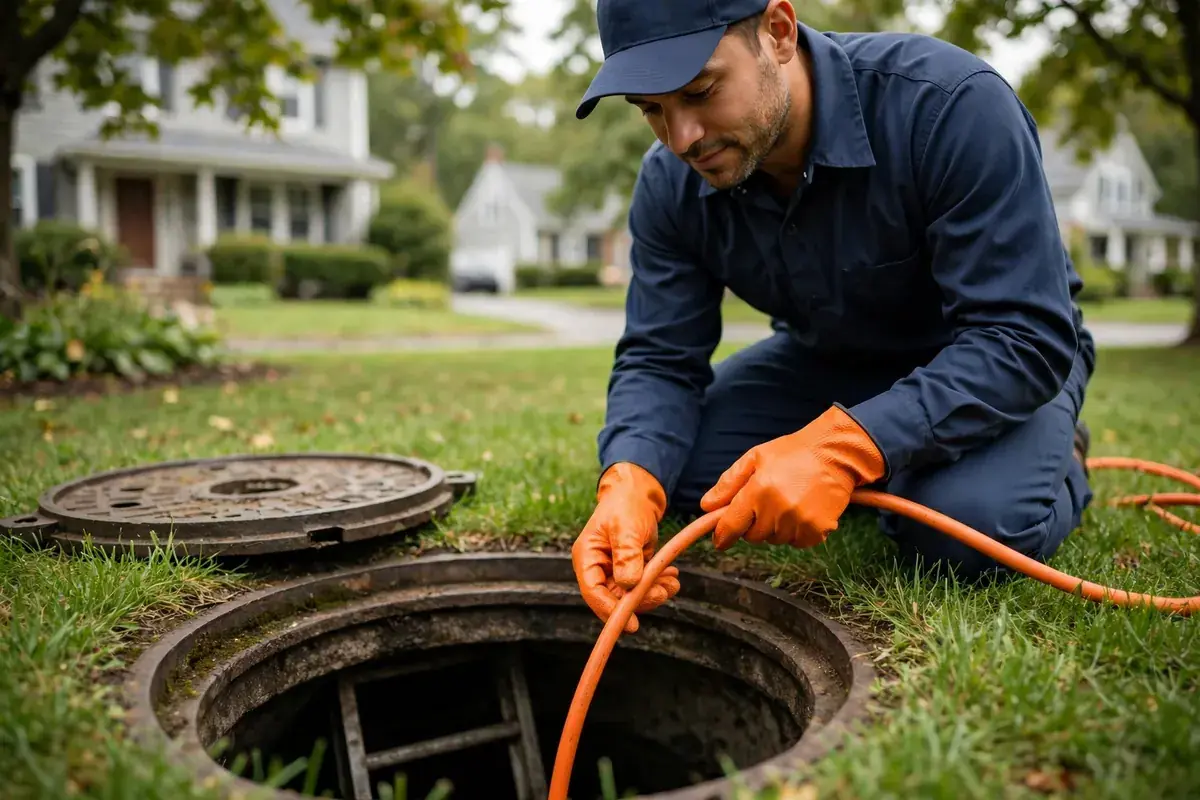
- Find your cleanout if you can — often a capped pipe in the basement near where the line exits, or outside near the foundation.
- Clear space around it.
- Avoid heavy water use right before the inspection so the line isn't full.
- Ask whether you'll receive the video file and a written summary.
During the inspection
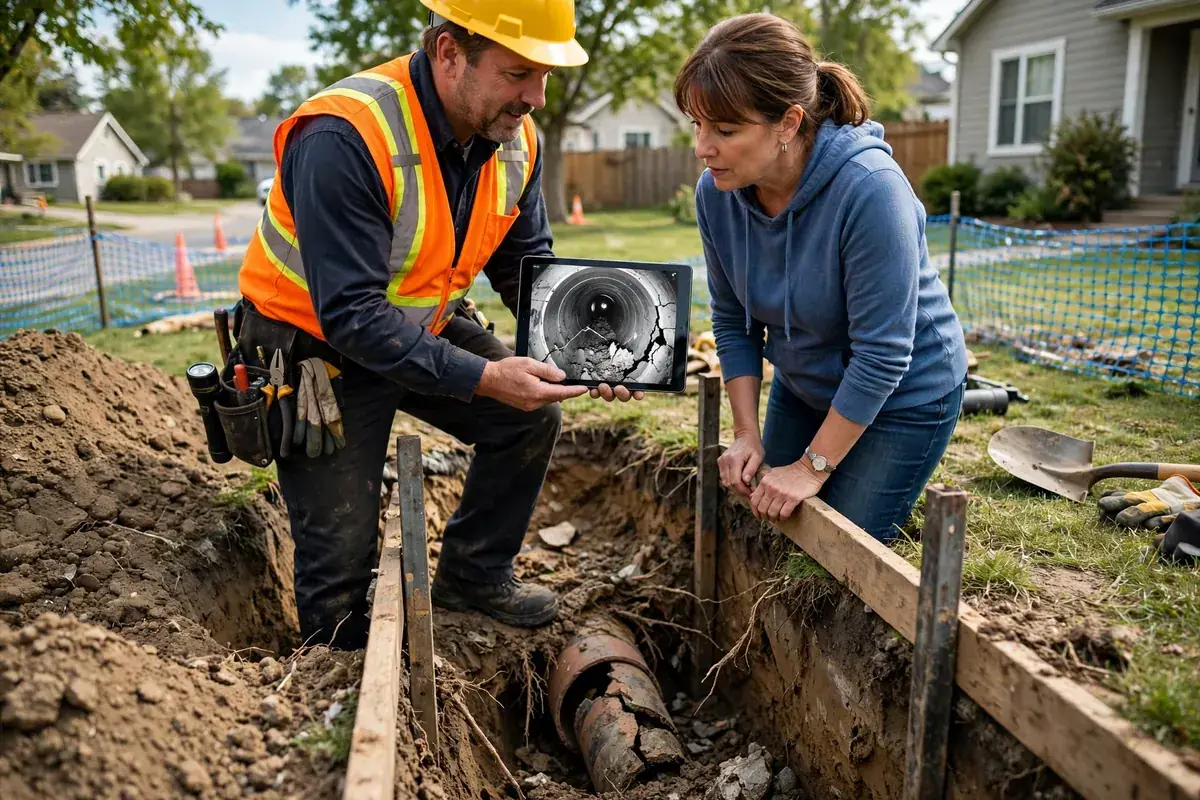
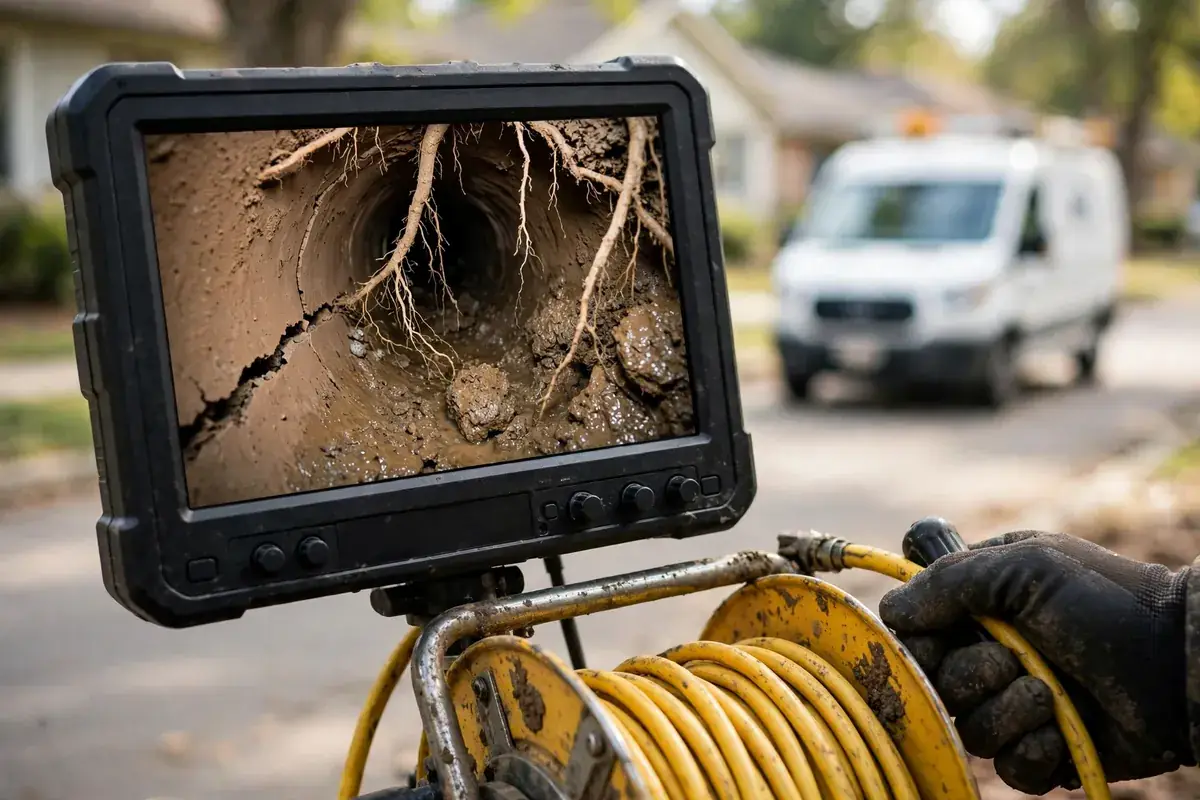
The technician feeds a waterproof camera head on a semi-rigid push cable into the line, watching a monitor. A counter shows distance from the entry point. When they find something, they'll pause, record and often use a locator to mark the spot and depth from above. The whole process typically takes around an hour for a house.
What defects look like on screen
| On screen | What it usually means |
|---|---|
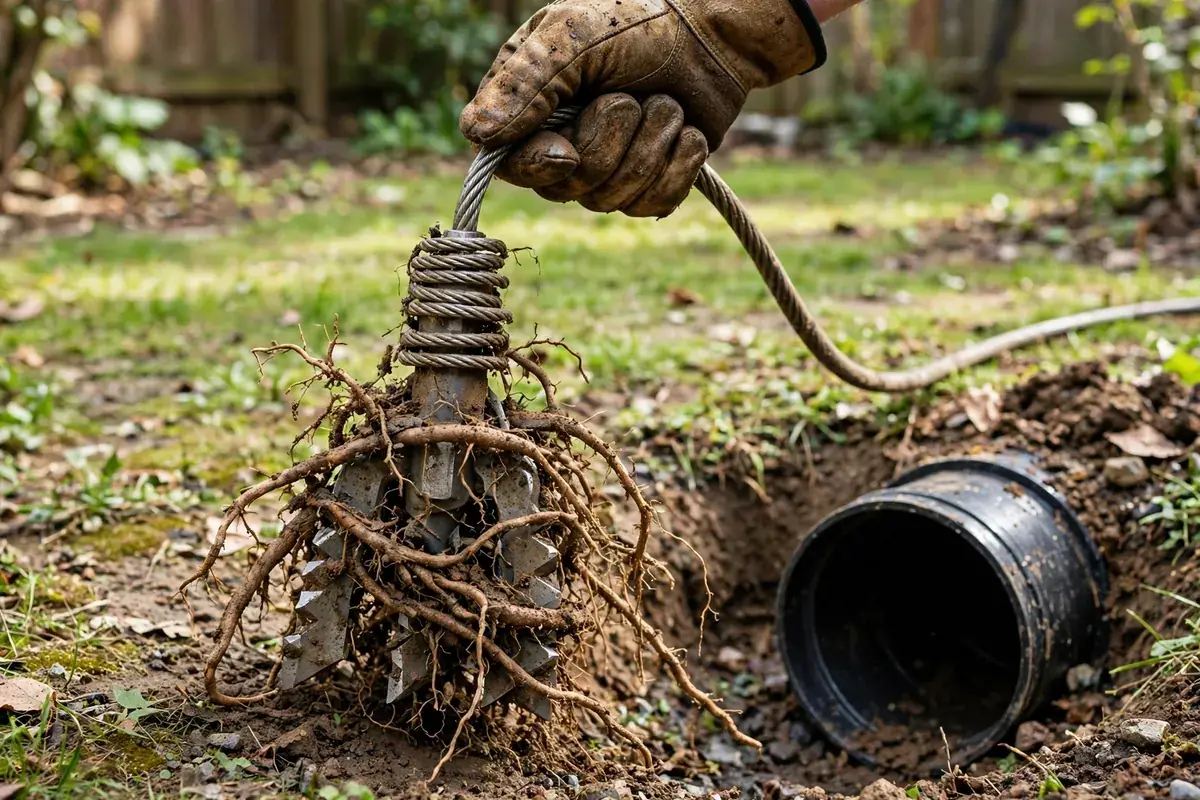
| Hair-like strands or a fuzzy mass at a joint | Root intrusion |
| A dark line or jagged edge in the wall | Crack or fracture |
| A visible step or ledge at a joint | Offset joint |
| Camera lens goes under water for a stretch | Belly (sag) |
| Oval or flattened pipe, blistered black wall | Deformed Orangeburg |
| Lumpy, rough or orange-brown walls | Corrosion / scale in cast iron |
| Soil, gravel or daylight visible | Broken or collapsed section |
Questions to ask afterward
- What material is the pipe, and does it change along the way?
- Where exactly is each defect, and how deep?
- Is the problem on my side of the property line or the town's?
- What happens if I wait?
- What are my options — maintenance, spot repair, lining or replacement?
For home buyers
A general home inspection usually doesn't include the sewer lateral. For older Connecticut homes — and homes with big trees between the house and the street — a sewer scope before closing can reveal problems that would otherwise be yours to fix. The footage can also inform negotiations.
Where the camera goes in: access points explained
| Access point | Pros | Cons |
|---|---|---|
| Outdoor cleanout | Easiest, cleanest, close to the lateral | Not every house has one |
| Basement cleanout or trap | Common in older Connecticut homes | Old caps can be seized; may need careful removal |
| Pulled toilet | Works when there's no cleanout | Extra labor; toilet must be reset |
| Roof vent | No indoor mess | Roof access; long push before reaching the lateral |
If your house has no cleanout, ask about adding one during any repair. It makes every future cleaning and inspection easier and cheaper.
Locating: how the problem gets marked on your lawn
Most push cameras carry a small radio transmitter, called a sonde, in or just behind the camera head. When the camera stops at a defect, the technician walks the surface with a receiver to find the signal and estimate depth. That point gets marked with paint or a flag. Good locating means any excavation can be small and in the right spot — and it tells you whether the defect is on your side of the property line or closer to the street.
What a good inspection report includes
- The address, date and access point used
- Pipe material(s) and approximate diameter
- Distance markers for every defect, measured from the access point
- Defect type for each — roots, crack, offset, sag, deformation, collapse
- Approximate depth at located points
- Where the line ends — at the main, a septic tank, or where the camera couldn't pass
- The video file
- Recommendations, separated from the findings
Pre-purchase sewer scopes in Connecticut
For buyers, a sewer scope is a relatively small expense next to the cost of a failed lateral discovered after closing. It's especially worth considering when:
- The home was built before about 1980
- There are large trees between the house and the street or septic tank
- The seller reports past backups or drain cleaning
- The house has been vacant, since problems may not show without regular use
- The property is a multi-family, where the line carries more flow
Schedule it within your inspection contingency period so you have time to get a repair quote and negotiate if needed.
Limits of a camera inspection
A camera shows the inside of the pipe, not the soil around it. It can't always tell how far a leak has spread, and it can't pass through a full collapse or heavy blockage. Water in a sag hides the pipe floor. When the picture isn't complete, contractors may add cleaning, a second access point, or leak detection methods like smoke or dye testing.
Ready to see inside your line? Visit our sewer camera inspection page or call (855) 554-1144. It's the first step toward any sewer line repair in Connecticut.
Quick answers
Can a camera inspection damage my pipes?
It's a non-invasive inspection. A careful technician won't force the camera past a collapse or severe obstruction.
Can I watch the inspection?
Most technicians are happy to have you watch the monitor and explain what you're seeing.
Do I need to be home for a sewer camera inspection?
It helps. You'll need to provide access, and watching the screen with the technician is the best way to understand the findings.
Can a camera inspection find a leak?
It can show cracks, open joints and breaks where leaks are likely. Confirming that wastewater is escaping sometimes needs a dye or smoke test as well.
What if the camera can't get through?
That usually marks a heavy blockage, severe offset or collapse. The line may be cleared and re-inspected, or scoped from another access point.
Have a sewer problem right now?
Call (855) 554-1144 to connect with an independent local contractor for sewer line repair in Connecticut.
This guide is general information, not a professional assessment of your property. Local rules, permits and responsibilities vary by town and sewer authority.