Key takeaways
- Roots enter through existing cracks and joints — they're a symptom of an opening in the pipe.
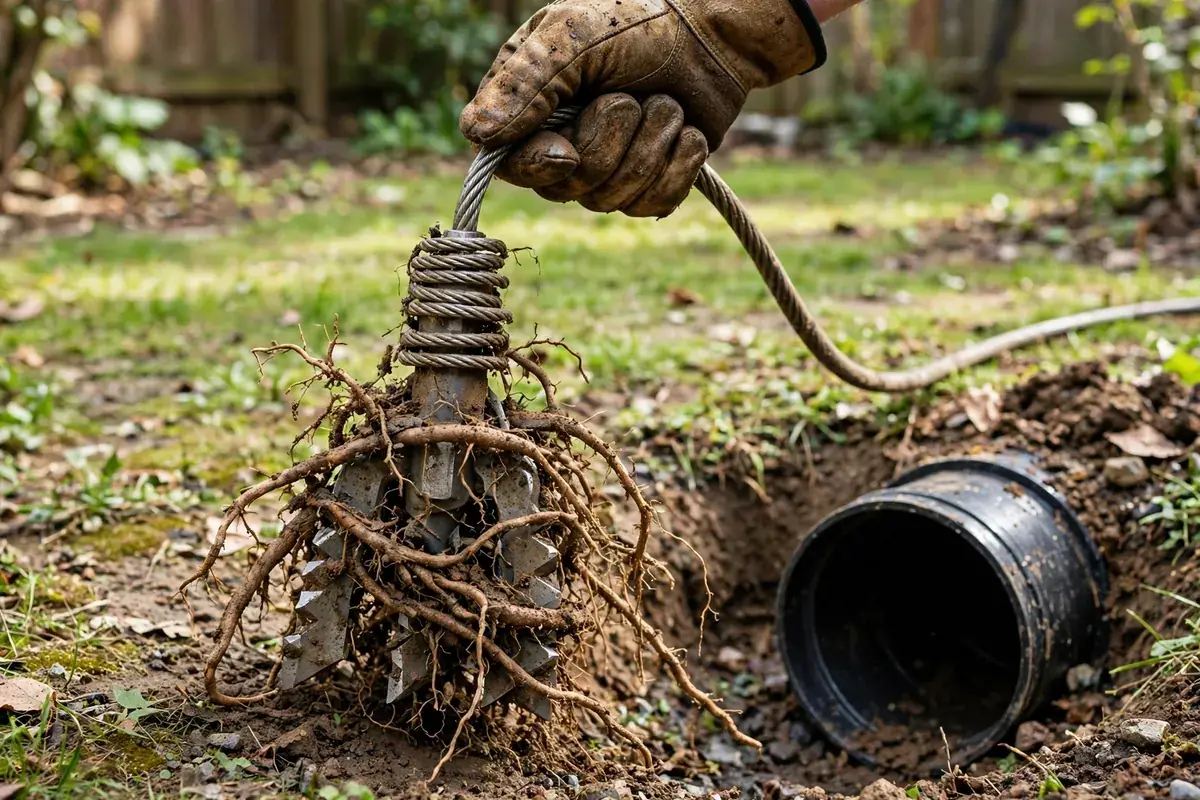
- Cutting roots restores flow, but they usually grow back; sealing the pipe is the permanent fix.
- Clay pipe with many joints is the most root-prone material under older Connecticut homes.
- If you're paying for root cleaning every year, compare that against the cost of lining.
Tree roots are one of the most common causes of sewer backups in Connecticut. Mature maples, oaks, willows and other street trees line many of the state's older neighborhoods, and their roots are very good at finding the warm, moist, nutrient-rich vapor leaking from an old sewer joint.
How roots get into a sewer line
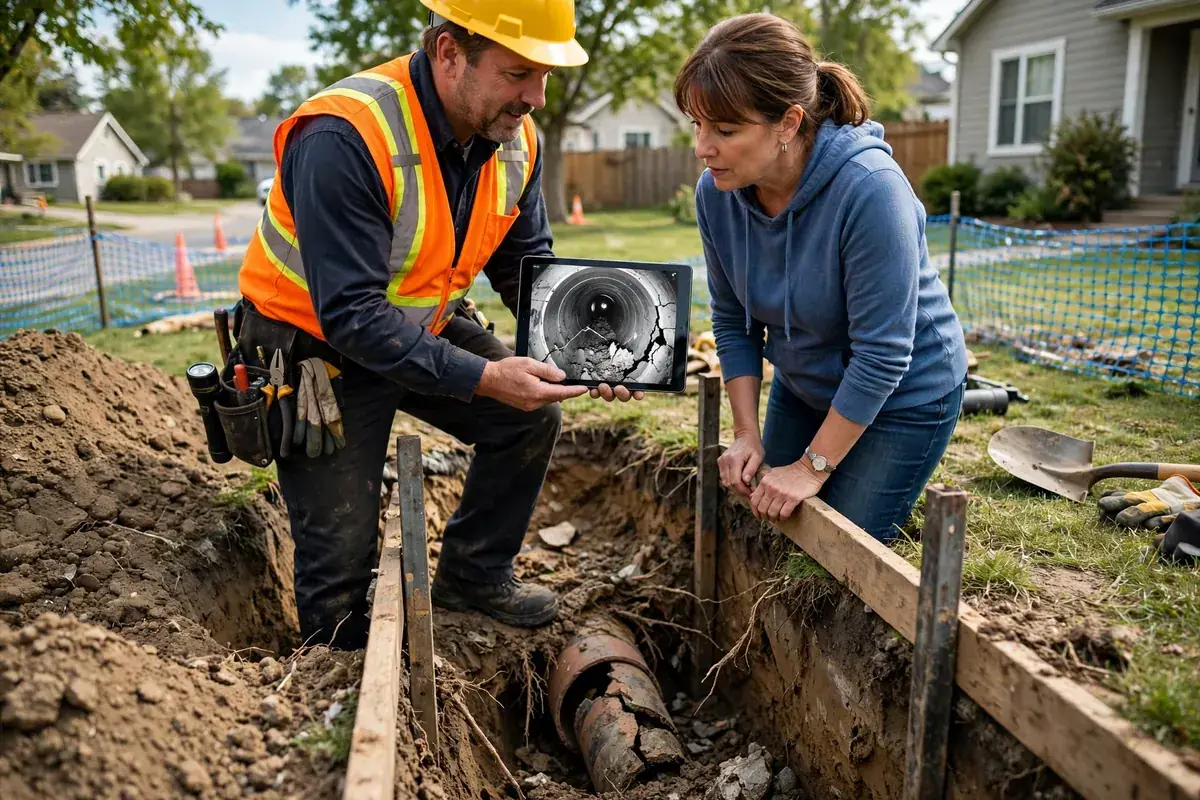
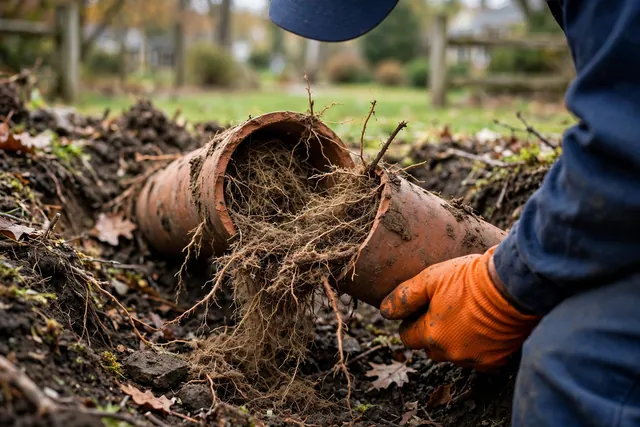
Roots don't usually break a healthy pipe. They find a way in where the pipe is already open — a hairline crack, a slightly separated joint, a deteriorated gasket. Clay pipe, laid in short sections with many joints, is especially vulnerable, which is why roots are such a frequent finding under older homes. Once inside, fine hair roots spread into a dense mat that traps toilet paper, grease and solids until the line stops.
Signs you have roots in the line
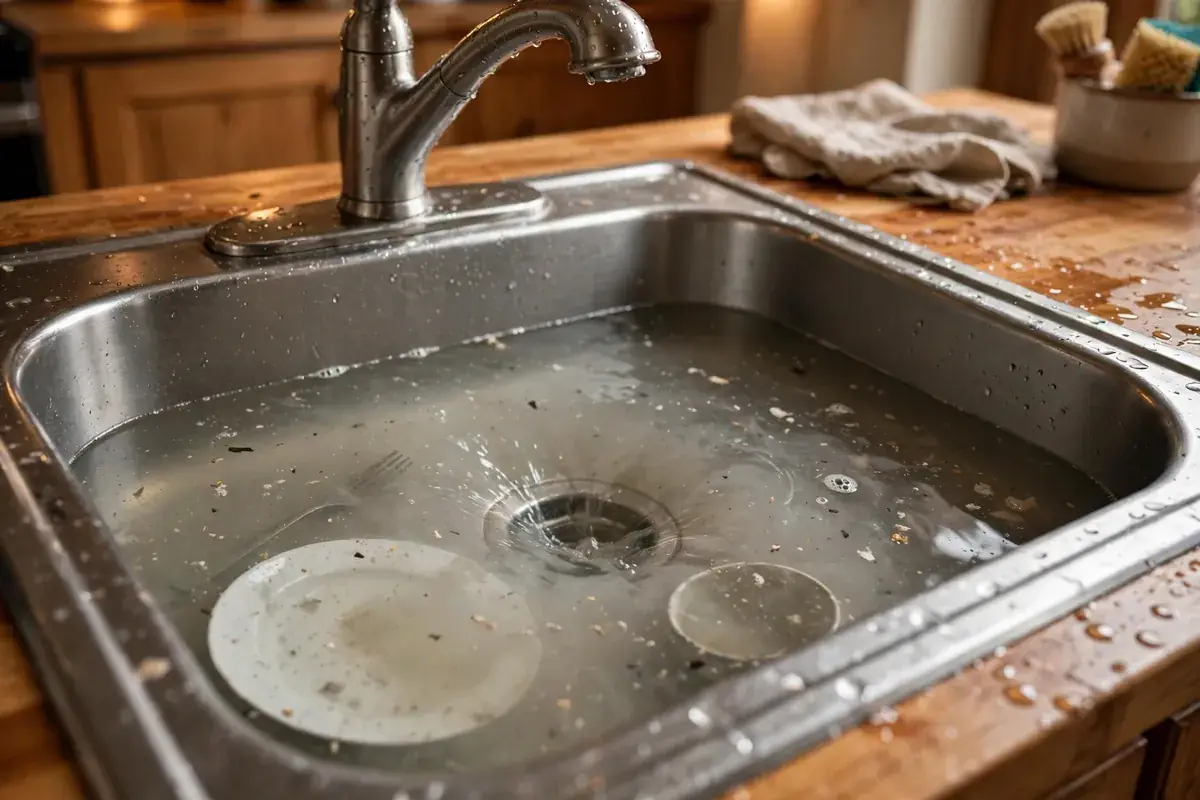
- Slow drains throughout the house that gradually get worse
- Backups that return months after a cleaning — often in late summer and fall, when roots are active
- Gurgling toilets
- A cleaning that brings back stringy roots on the cable
- Large trees or shrubs within reach of the line's path
Your options for dealing with roots
| Option | What it does | When it makes sense |
|---|---|---|
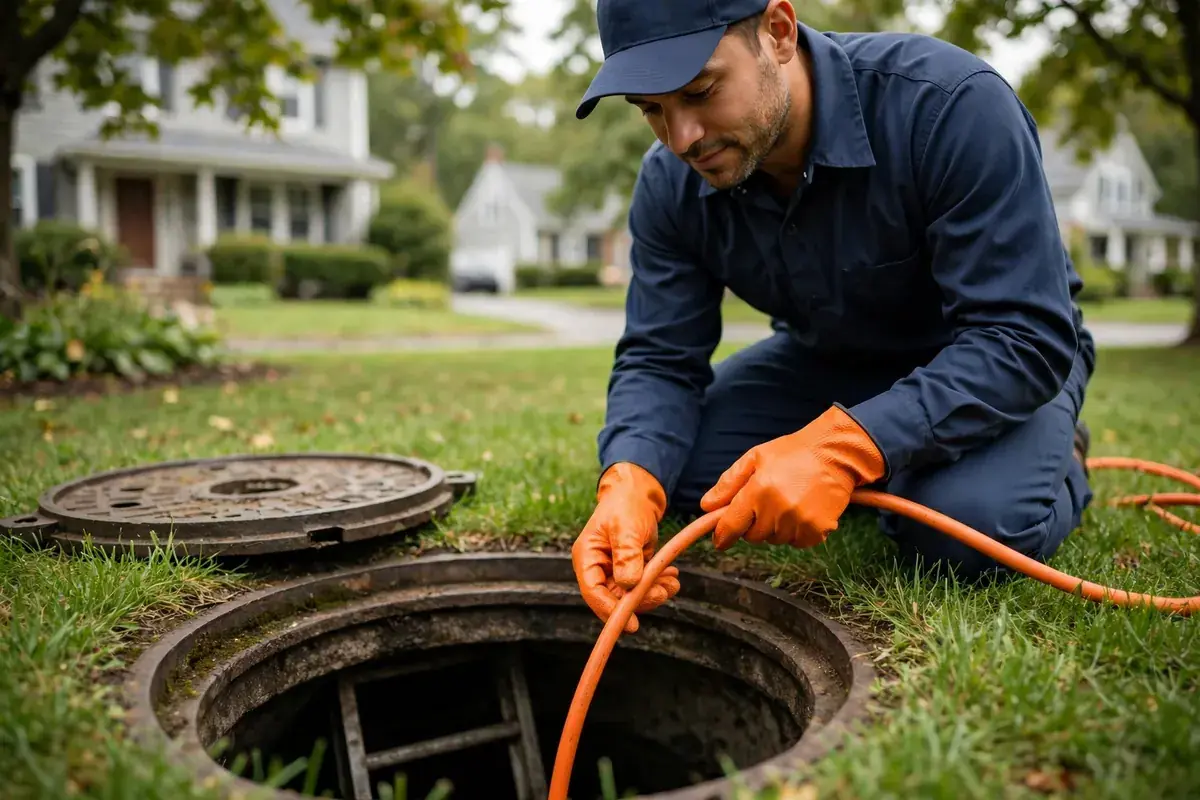
| Root cutting / cabling | Cuts the roots out of the pipe to restore flow. | Emergencies; lines with minor intrusion; as a stop-gap. |
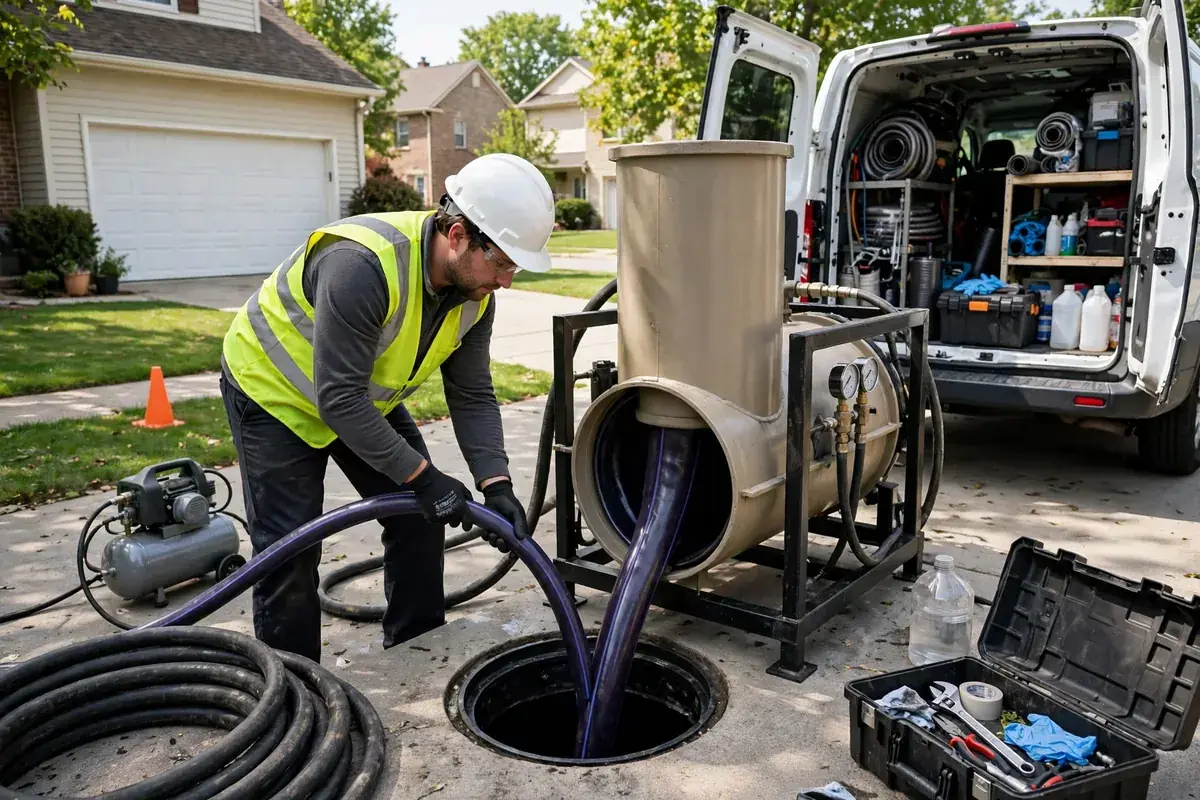
| Hydro-jetting | Scours fine roots and buildup off the full pipe wall. | Fine root mats; preparing for lining. |
| Root-control treatments | Products applied by professionals to slow regrowth inside the pipe. | Sound pipe with recurring root growth, where allowed. |
| Pipe lining | Seals joints and cracks from inside so roots can't re-enter. | Pipe still holds its shape. |
| Replacement | New jointless or tightly sealed pipe. | Pipe is broken, sagging or Orangeburg. |
Cutting roots without fixing the opening is a maintenance plan, not a cure. Roots that have been cut often grow back thicker. If you're paying for cleaning every year, ask for a camera inspection and a quote for trenchless lining — the math often favors a permanent fix.
Do I need to remove the tree?
Usually not. Sealing the pipe removes the reason roots enter. Removing a healthy tree is rarely necessary and, for street trees, often isn't your decision — the town may own it. If a new line is being installed, ask whether its path can avoid the root zone.
Preventing root problems
- Know where your sewer line runs before planting trees or large shrubs.
- Choose smaller, less aggressive species near the line.
- If your line has known roots, schedule maintenance before late summer.
- Fix cracks and open joints — that's the only permanent prevention.
Why roots are worse in late summer and fall
Trees grow and seek water most aggressively during the warm months. In dry stretches of late summer, the moisture and warmth escaping from a sewer joint become especially attractive, and root masses inside the pipe can thicken quickly. That's why many Connecticut homeowners see root-related backups between August and November, and why scheduling maintenance before then makes sense for a line with known roots.
Which trees cause the most trouble?
Any tree can send roots into an open joint, but fast-growing, water-seeking species tend to cause the most problems when planted near a sewer line. Commonly cited examples include willows, silver maples, poplars and cottonwoods, and some birches. Large, long-established oaks and maples lining older streets can also reach laterals, simply because their root systems extend well beyond the drip line.
Shrubs matter too. Dense plantings directly over a lateral put fine roots right on top of every joint.
How much of the pipe is affected? Reading the camera
| Camera finding | What it usually means | Typical direction |
|---|---|---|
| Fine hair roots at one joint | Small opening, early intrusion | Clean; consider a spot repair or short liner |
| Root masses at several joints | Multiple openings along the line | Clean, then full-length lining if the pipe is round |
| Roots plus cracks or offsets | Pipe is shifting as well as leaking | Lining or replacement depending on shape |
| Roots through a collapsed or crushed section | Structural failure | Excavate and replace that section or the line |
| Roots in Orangeburg | Fiber pipe already deteriorating | Usually replacement |
The real cost of "just cutting the roots"
Root cutting is the right first move in an emergency, and it's reasonable maintenance for a line with minor intrusion. The problem is repetition. Each cleaning is a service call, each backup risks damage and cleanup, and the roots tend to come back thicker. Over several years, the combined cost of repeat cleanings and the occasional backup can approach what a permanent repair would have cost — without fixing anything.
A useful way to think about it: ask the contractor how often they'd expect to return for your line, multiply that out over five to ten years, and compare it against a quote for lining or a spot repair based on the same camera footage.
Roots in septic system lines
In towns where most homes rely on septic — much of the Farmington Valley, the Quiet Corner, the lower river valley and parts of the shoreline — roots can block the building sewer between the house and the tank, the tank inlet, or the pipes leading to the leaching field. Slow drains in a septic home don't always mean the tank needs pumping; a root-blocked building sewer can produce the same symptoms. A camera inspection of the line to the tank is a quick way to tell the difference.
Street trees and town property
If the tree causing the problem stands between the sidewalk and the curb, it may belong to the town. Before removing or heavily pruning it, contact your town's tree warden or public works department. In most cases, sealing your pipe solves the problem without touching the tree at all.
Roots are among the most common reasons people search for sewer line repair in Connecticut. If yours keep coming back, call (855) 554-1144 to connect with a local contractor who can show you what's going on inside the pipe.
Quick answers
Does rock salt or copper sulfate kill sewer roots?
Some products are sold for this, but results vary and some can harm septic systems or be restricted. Talk to a professional about what's appropriate for your line and town.
Is root damage covered by insurance?
Many standard homeowners policies exclude wear and tear and root intrusion. Some insurers offer service-line endorsements. Check your policy.
How often should a sewer line with roots be cleaned?
It varies with the tree and the pipe. Some lines need cleaning once a year; heavy intrusion may need it more often. If you're cleaning more than once a year, a structural repair is usually worth pricing.
Can roots get into PVC sewer pipe?
Properly installed PVC with glued joints is highly root-resistant. Problems usually come from a damaged section, a poorly made joint, or the connection where new PVC meets older pipe.
Will cutting the roots kill the tree?
Removing the roots inside the pipe generally doesn't harm a healthy tree, since they're a small part of its root system.
Have a sewer problem right now?
Call (855) 554-1144 to connect with an independent local contractor for sewer line repair in Connecticut.
This guide is general information, not a professional assessment of your property. Local rules, permits and responsibilities vary by town and sewer authority.