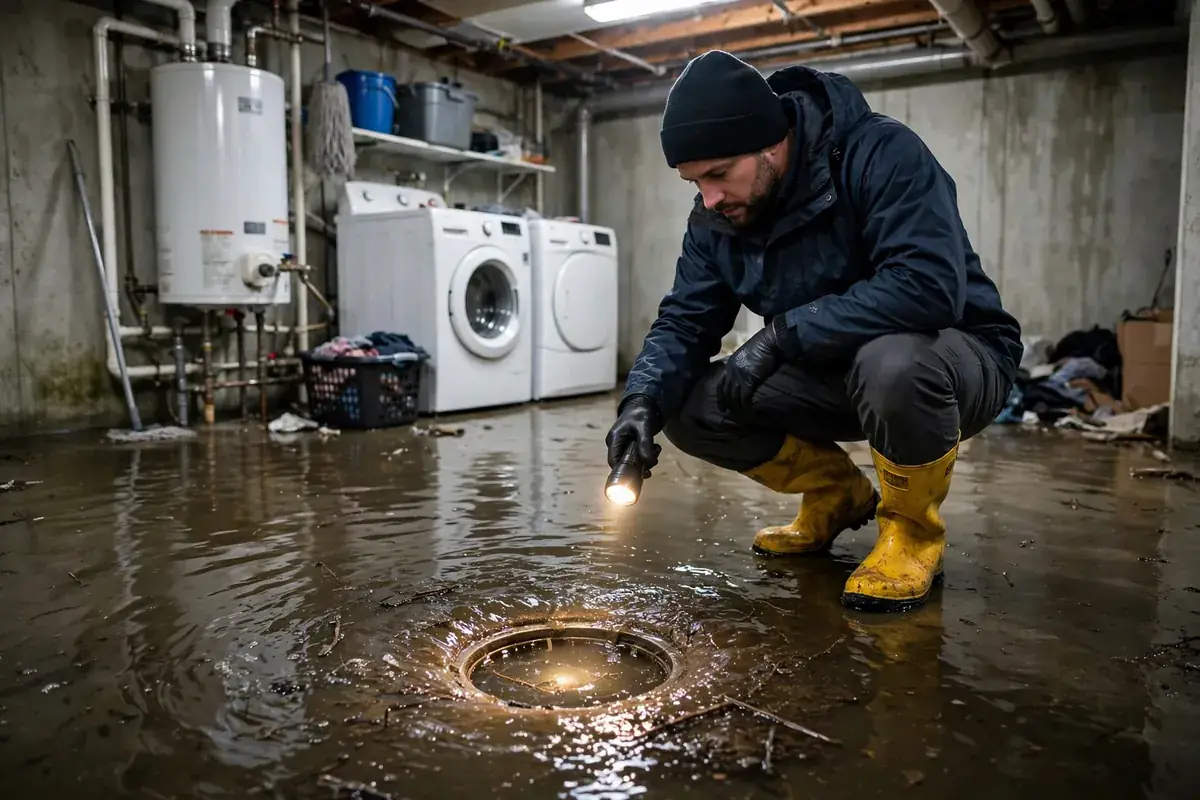
Key takeaways
- Stop using water immediately — every gallon ends up at the lowest drain.
- Keep people and pets away from sewage and stay clear of electrical hazards.
- Photograph everything before cleanup and contact your insurer early.
- Clearing the line isn't the end — find the cause with a camera so it doesn't repeat.
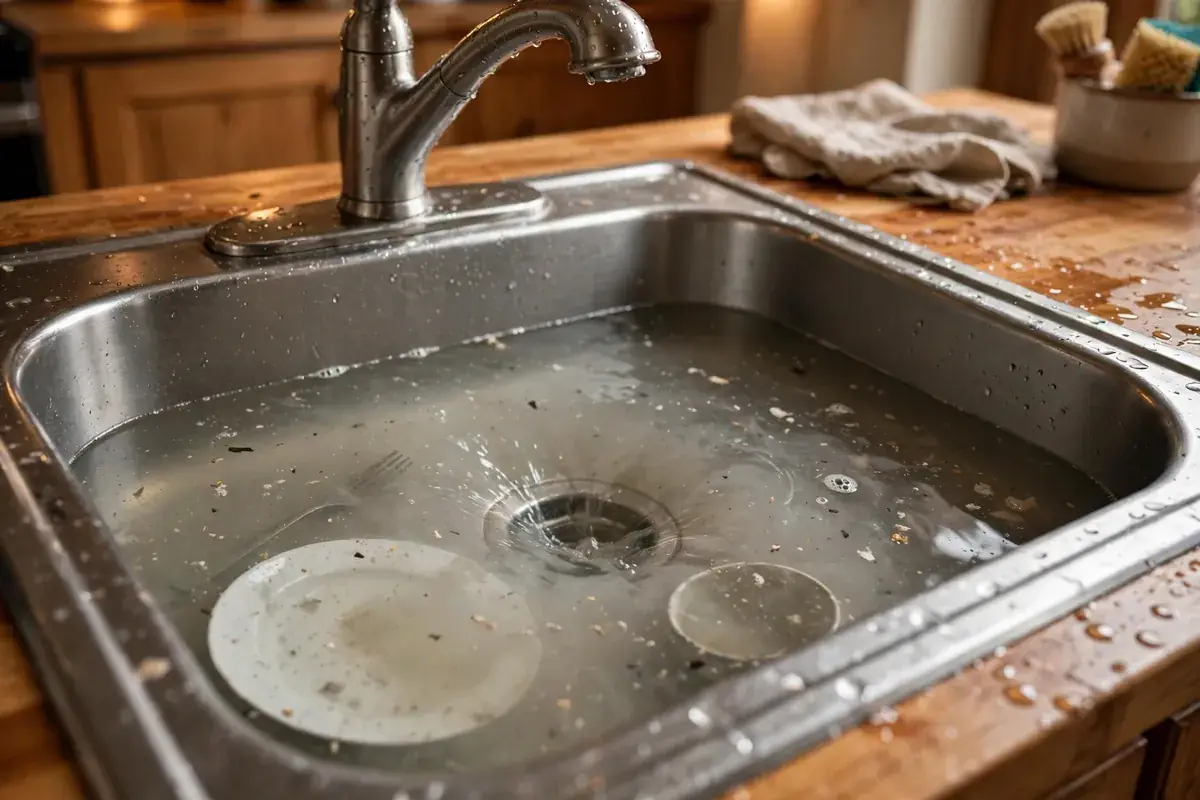
Few home problems are as unpleasant as sewage coming up through the basement floor drain. Acting quickly and in the right order protects your health, limits damage and helps with any insurance claim.
Step 1: Stop using water
Every flush, shower or laundry cycle adds to the backup. Tell everyone in the house to stop using water until the line is cleared.
Step 2: Stay safe
- Keep children and pets away from the area.
- Don't walk through sewage without waterproof boots and gloves.
- Don't touch electrical equipment or outlets near standing water. Shut off power to the area at the panel only if you can do so without standing in water.
- Ventilate if you can do so safely.
Step 3: Get the line cleared
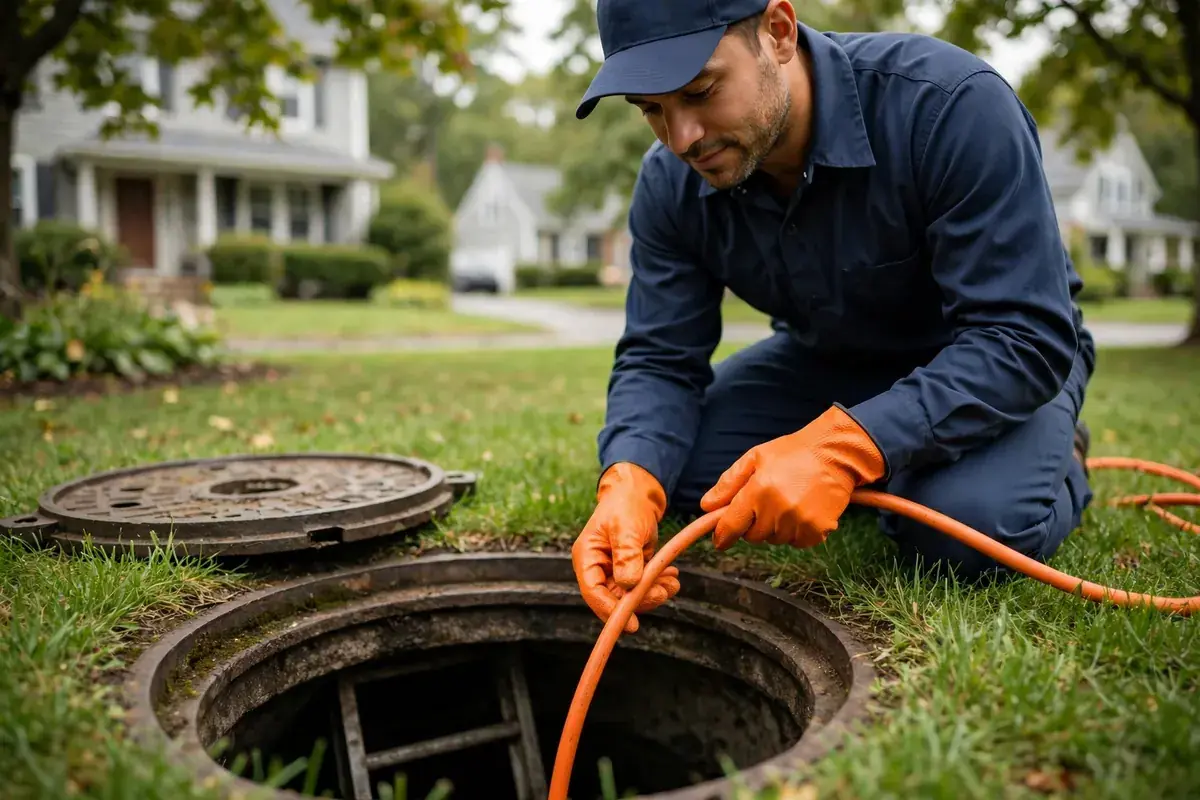
Call a sewer contractor — (855) 554-1144 connects you with an available local provider. If neighbors are reporting backups at the same time, also contact your town's sewer department or WPCA, because the public main may be blocked.
Step 4: Document everything
Photograph and video the water, affected belongings and the drain before cleanup. Keep receipts. Ask the contractor to note what caused the blockage and where it was. Call your insurer early — many standard policies exclude sewer backup unless you've added an endorsement.
Step 5: Clean up properly
Sewage contains bacteria and other pathogens. Porous materials that soaked up sewage — carpet, padding, drywall, cardboard boxes — are often discarded. Hard surfaces should be cleaned and disinfected. For larger backups, a professional water-damage and remediation company is the safer choice.
Step 6: Find the cause
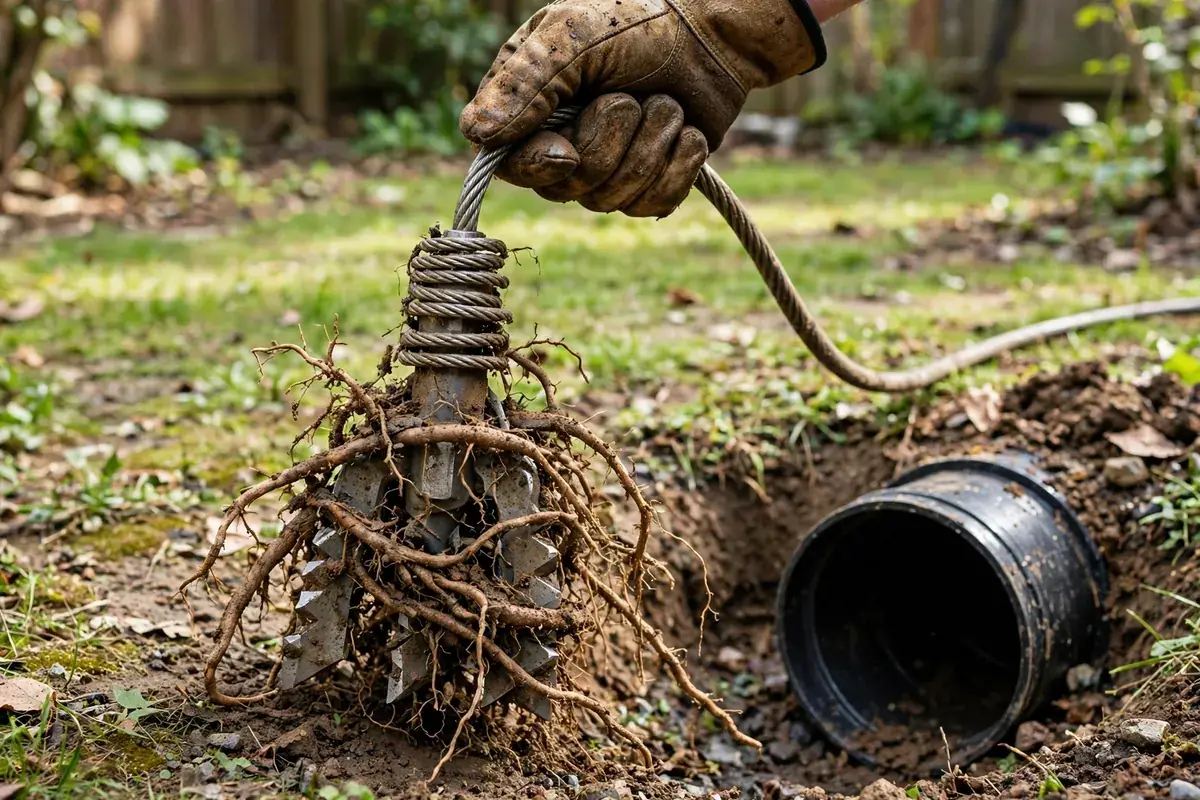
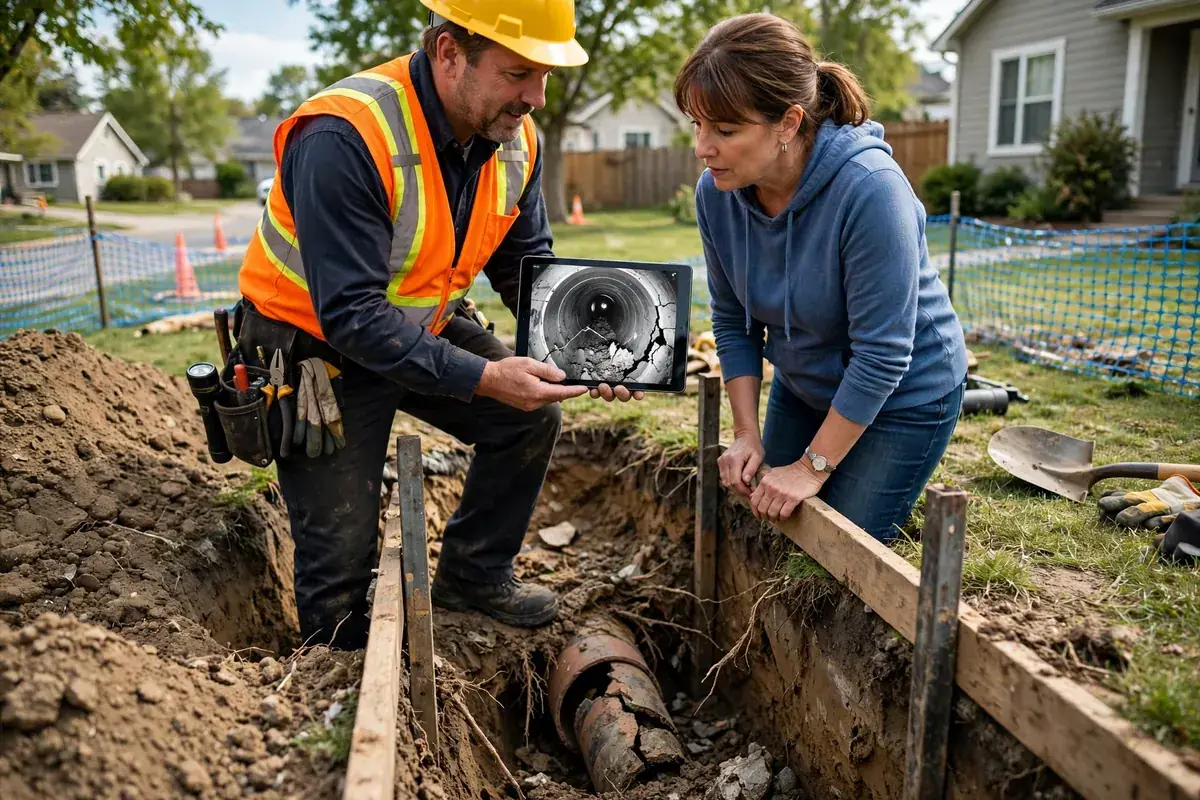
Once the line is flowing, have it inspected on camera. Backups usually come from roots, a sag, a broken section, grease or wipes — or, in some neighborhoods, an overloaded public sewer during heavy rain. Our sewer backup diagnosis page explains how the cause is pinned down.
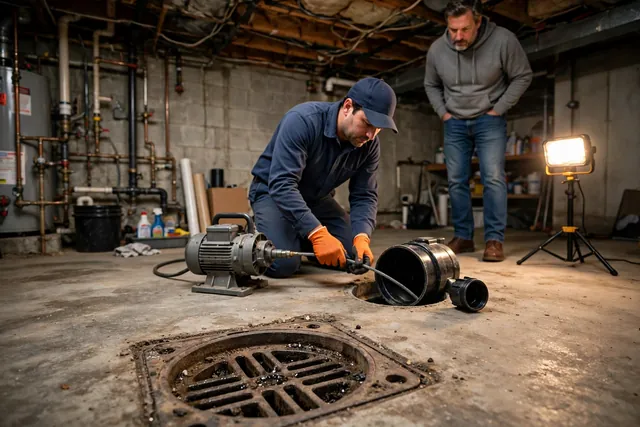
Step 7: Prevent the next one
- Repair the pipe if the camera finds damage — see repair vs. replacement.
- Ask whether a backwater valve is appropriate for your house and permitted in your town.
- Keep grease and wipes out of the drains.
- Disconnect sump pumps or downspouts that discharge into the sewer, where required.
- Check your insurance for sewer backup coverage.
Is it your line or the town's?
| Clue | Points to |
|---|---|
| Only your home is affected | Your private lateral or building drain |
| Several neighbors back up at the same time | The public sewer main — call the town or WPCA right away |
| Backup happens during heavy rain | Could be either: an overloaded public sewer or groundwater entering your cracked line |
| Outdoor cleanout is full of water | Blockage downstream of the cleanout, toward the street |
| Outdoor cleanout is empty | Blockage between the house and the cleanout |
If you know where your cleanout is, a contractor can often tell within minutes which side the blockage is on. Don't open a cleanout yourself if sewage may be under pressure behind it.
Cleanup: what to keep and what to toss
| Item | Usually |
|---|---|
| Carpet and padding soaked with sewage | Discard |
| Drywall and insulation that wicked up sewage | Cut out above the water line and discard |
| Cardboard boxes, paper, upholstered furniture | Discard |
| Concrete floors, tile, metal shelving | Clean and disinfect |
| Washer, dryer, water heater, furnace | Have checked by a qualified technician before use |
| Food, medicine, cosmetics that touched sewage | Discard |
For anything beyond a small, contained backup on a hard floor, a professional remediation company is the safer choice. Keep receipts and photos for insurance.
Insurance: what to know before you need it
Many standard homeowners policies exclude sewer or drain backup unless you've added a specific endorsement, and they often exclude repair of the pipe itself as wear and tear. Coverage limits on backup endorsements vary widely. Some insurers and utilities offer separate service-line coverage for the pipe. Review your policy now, and if you do have coverage, notify your insurer quickly and follow their documentation steps.
Prevention options compared
| Option | What it does | Good for |
|---|---|---|
| Fix the pipe | Removes roots, cracks or sags that catch waste | Any backup caused by a defect in your line |
| Backwater valve | Closes if sewage flows backward from the main | Low-lying homes and neighborhoods prone to sewer surcharging |
| Disconnect sump pumps and downspouts from the sewer | Reduces water entering the sewer during storms | Homes with illegal or old connections; often required by towns |
| Routine maintenance cleaning | Keeps known roots or grease in check | Sound pipe with recurring buildup |
| Better habits | No grease, no wipes, no paper towels | Every home |
Special case: septic homes
If your home is on a septic system, a backup can come from the building sewer, the tank inlet, a full tank, or a failing leaching field. Signs that point to the line rather than the system include a recently pumped tank, a dry area around the tank, and roots or debris found near the inlet. A camera inspection of the line to the tank, combined with a check of the tank level, usually sorts it out.
A backup is often the first sign that a home needs sewer line repair. If it's happening now, call (855) 554-1144.
Quick answers
Can I clean up a sewage backup myself?
Small, contained backups on hard floors may be manageable with protective gear and disinfectant. Large backups or any involving porous materials are best handled by professionals.
Why does it only back up when it rains?
Heavy rain can overload combined or leaky sewers, or groundwater can flow into a cracked lateral. Both point to a need for diagnosis.
Should I call the town or a plumber first?
If neighbors are affected too, call the town or WPCA first. If it's only your home, call a sewer contractor — the problem is most likely in your private line.
Can I run the dishwasher after the line is cleared?
Once a professional has cleared the line and confirmed it's flowing, normal use can usually resume. Ask whether they recommend a camera inspection first.
How do I prevent a backup while I'm away?
Fix known defects, keep traps filled, and consider a backwater valve if your area surcharges. Ask someone to check the basement during heavy storms.
Have a sewer problem right now?
Call (855) 554-1144 to connect with an independent local contractor for sewer line repair in Connecticut.
This guide is general information, not a professional assessment of your property. Local rules, permits and responsibilities vary by town and sewer authority.