Key takeaways
- In most Connecticut towns the owner is responsible for the lateral at least to the property line, often to the main.
- Rules vary by town and sewer authority — MDC, Greater New Haven WPCA and local WPCAs each set their own.
- Everything on a septic property, from the house to the leaching field, is privately owned.
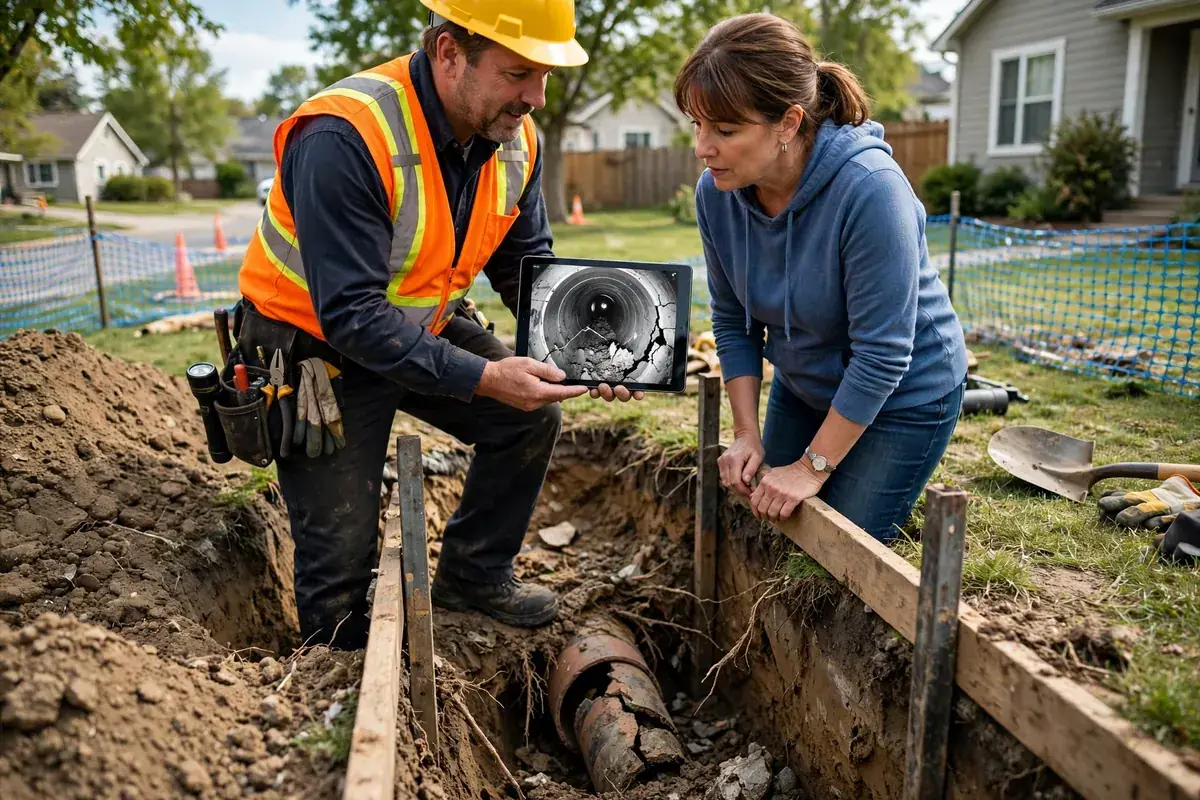
- A camera inspection with locating shows which side of the line a defect is on.
The pipe that carries wastewater from your house to the public sewer is called the building sewer or sewer lateral. When it breaks, the first question is often: who pays? In Connecticut, the answer depends on your town — but there are common patterns.
The general rule
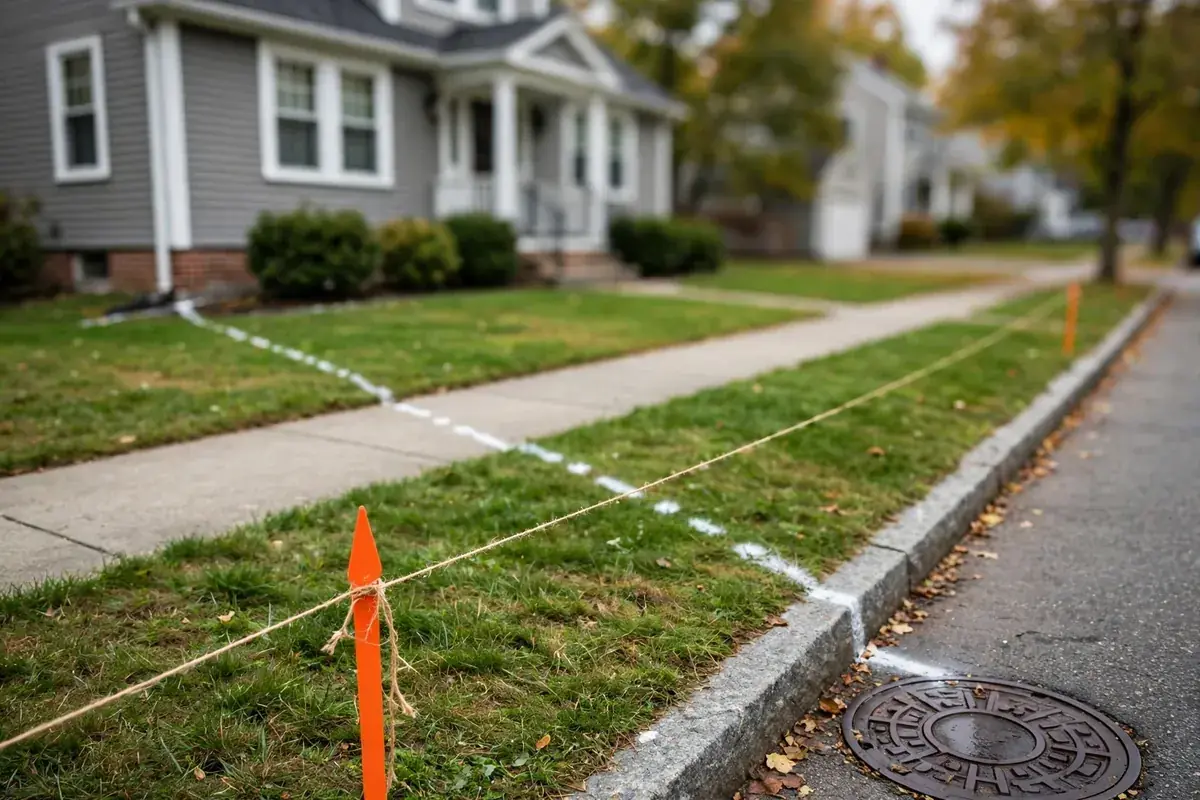
In most Connecticut communities, the property owner owns and maintains the building sewer from the house to the public sewer — at least to the property line, and in many towns all the way to the connection at the main, even under the street. The town or regional authority typically owns and maintains the main itself.
Why it varies
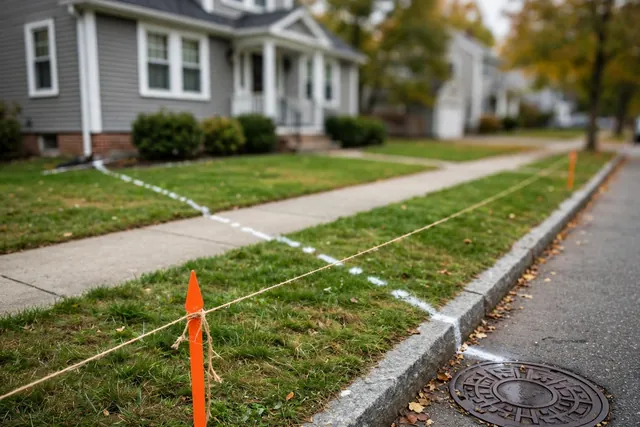
Sewer service in Connecticut is run by many different bodies: town water pollution control authorities (WPCAs), public works departments, and regional districts such as the Metropolitan District (MDC) in the Hartford area and the Greater New Haven WPCA. Each sets its own rules for laterals, connections, permits and repairs within its service area. Some towns take responsibility for the section under the road; others don't.
How to find out for your property
- Call or check the website of your town's WPCA, sewer department or public works department.
- Ask specifically: "Who is responsible for the lateral between the property line and the main?"
- Ask whether permits or inspections are needed for repairs, and whether a street opening permit is required.
- Keep a note of the answer and who gave it.
If you're on a septic system
Everything from the house to the septic tank and leaching field is private. The building sewer between the house and the tank fails in the same ways as a lateral to the street — roots, cracks, sags — and is a common cause of slow drains that get blamed on the tank itself.
Condos and shared lines
In condominiums, multi-family buildings and older neighborhoods with shared laterals, responsibility can be split among owners or held by an association. Check your declaration or association documents.
What about insurance?
Standard homeowners policies often exclude wear and tear, and many exclude sewer backup unless you've added an endorsement. Some insurers and utilities offer service-line coverage. It's worth reviewing your policy before you need it.
Know the parts: building drain, lateral, wye and main
| Part | Where it is | Usually owned by |
|---|---|---|
| Building drain | Inside the house, collecting all fixtures | Owner |
| Building sewer / lateral | From the foundation to the public sewer | Owner — at least to the property line |
| Cleanout | Access point on the drain or lateral | Owner |
| Wye / tap at the main | Where the lateral joins the main | Varies by town |
| Sewer main | Under the street or easement | Town or regional authority |
Sewer authorities you may deal with in Connecticut
- The Metropolitan District (MDC) serves Hartford and several surrounding towns, including West Hartford, East Hartford, Wethersfield, Newington, Rocky Hill, Bloomfield and Windsor.
- The Greater New Haven WPCA serves New Haven, Hamden, East Haven and Woodbridge.
- Town WPCAs and public works departments run sewer systems in many other municipalities.
- Special districts serve parts of some towns — for example, the Eighth Utilities District in northern Manchester.
Each sets its own rules for connections, permits, inspections and repairs. The quickest way to get a definitive answer for your property is to call the authority that bills you for sewer use.
Questions to ask your sewer authority
- Who is responsible for the lateral between my property line and the main?
- Who is responsible for the connection at the main itself?
- What permits and inspections are required for a repair or replacement?
- Do I need a street opening permit, and who obtains it?
- Are there approved contractors or specifications I must follow?
- Do you have records showing where my lateral connects?
Shared laterals and older neighborhoods
In some older Connecticut neighborhoods, two or more homes share a single lateral before it reaches the main. When that shared section fails, responsibility is usually split among the owners it serves, unless a deed, easement or association document says otherwise. If a camera shows another property's line joining yours, ask a real estate attorney to review your deed and any recorded easements before agreeing to a cost split.
Buying or selling a home
Because the lateral is usually the owner's responsibility, its condition can matter in a sale. Buyers often order a sewer scope; sellers who know their line was recently replaced or lined can share documentation, permits and camera footage. If a defect is found, it can be addressed through repair, a credit or a price adjustment — your agent and attorney can advise.
Whatever the answer for your town, a camera inspection shows where the problem is relative to the property line. Call (855) 554-1144 to connect with a local contractor for sewer line repair in Connecticut who can help you sort out the next steps.
Quick answers
Does the town have to fix a backup caused by its main?
If the public main is blocked or damaged, the authority that owns it is generally responsible for the main. Damage claims follow that authority's process. Contact them promptly.
Do I need the town's permission to repair my lateral?
Often you need a permit and an inspection, especially for the connection to the main or work in the road.
Does the town ever pay for lateral repairs?
Policies vary. Some authorities handle the section under the road or the connection at the main; others leave everything to the owner. Ask your authority directly.
What if a town tree damaged my lateral?
Contact the town. Some municipalities have processes for tree-related claims, but outcomes vary and the pipe itself may still be considered the owner's responsibility.
Who is responsible in a condo?
Usually the association for shared lines, and owners for lines serving only their unit. Your condo declaration and bylaws define the split.
Have a sewer problem right now?
Call (855) 554-1144 to connect with an independent local contractor for sewer line repair in Connecticut.
This guide is general information, not a professional assessment of your property. Local rules, permits and responsibilities vary by town and sewer authority.